2025 How to Choose the Right Agriculture Farm Equipment for Your Needs
Choosing the right agriculture farm equipment is a critical decision for any farmer or agricultural entrepreneur. With the vast array of tools and machines available on the market today, navigating the selection process can be overwhelming. The effectiveness and efficiency of your farming operations can largely depend on the equipment you choose. Understanding the specific needs of your farm, whether it be crop type, land size, or overall production goals, is essential in making informed choices.
As agricultural practices evolve, the importance of using the right equipment has become increasingly significant. From tractors and plows to seeders and harvesters, each piece of agriculture farm equipment plays a vital role in streamlining operations and boosting productivity. In this guide, we will explore key factors to consider when selecting the ideal tools for your agricultural endeavors. By aligning your equipment choices with your unique farming objectives, you can enhance performance and potentially increase profitability.
Understanding Your Farming Needs and Goals
When choosing the right agricultural farm equipment, understanding your specific farming needs and goals is essential. According to the 2021 Farm Equipment Market Trends Report by the Association of Equipment Manufacturers (AEM), nearly 70% of farmers highlighted the importance of aligning their equipment choices with their operational objectives. This alignment not only enhances productivity but also ensures that investments are made wisely, maximizing return on investment.
In addition, various agricultural studies indicate that equipment suited to specific farming practices can improve overall efficiency. For instance, producers engaged in precision farming reported productivity increases of up to 20% after adopting equipment that met their precise crop management needs. Similarly, a report by the USDA noted that farm operations focusing on sustainability had a heightened need for specialized tools that reduce environmental impact while still delivering high yields. Therefore, assessing your farming goals—whether they relate to yield improvement, cost reduction, or sustainable practices—is critical for selecting the most suitable equipment.
2025 How to Choose the Right Agriculture Farm Equipment for Your Needs
| Equipment Type |
Purpose |
Capacity / Capability |
Price Range ($) |
Recommended Soil Type |
| Tractor |
Tilling, Plowing, Harvesting |
50-500 HP |
15,000 - 150,000 |
Loamy, Clay |
| Combine Harvester |
Harvesting Crops |
10-30 tons/hour |
100,000 - 500,000 |
Sandy, Loamy |
| Plow |
Soil Preparation |
Varies by model |
1,000 - 5,000 |
Clay, Sandy |
| Seeder |
Planting Seeds |
Up to 10 acres/hour |
3,000 - 15,000 |
Loamy, Sandy |
| Irrigation System |
Watering Crops |
Varies based on system |
2,000 - 100,000 |
All types |
Evaluating Different Types of Agricultural Equipment
When evaluating different types of agricultural equipment, it's crucial to understand both the
specific needs of your farm and the variety of tools available in the market. Equipment can range from simple hand tools to
complex machinery, each designed for particular tasks such as planting, harvesting, or soil preparation. Assessing the scale of your operation,
the types of crops you grow, and the terrain of your land will help narrow down the options that best suit your farm’s requirements.
Tips: Always consider the efficiency and ease of use of the equipment you choose. Look for machines that can multitask
to save time and resources in your daily operations. Additionally, think about the maintenance needs and availability of spare parts
to ensure that your equipment will remain operational throughout the planting and harvesting seasons.
Moreover, cost is a significant factor in selecting agricultural equipment. While it might be tempting to opt for
the cheapest option, investing in reliable and durable machinery can save you money in the long run through
reduced repair costs and increased productivity. Research financing options
and understand the total cost of ownership to make a financially sound decision.
Tips: Attend agricultural fairs or trade shows to see the equipment in action and gather insights
from other farmers about their experiences. Hands-on demos can provide a clearer picture of the equipment’s functionality and performance in real-world conditions.
Assessing Equipment Size and Capacity for Your Farm
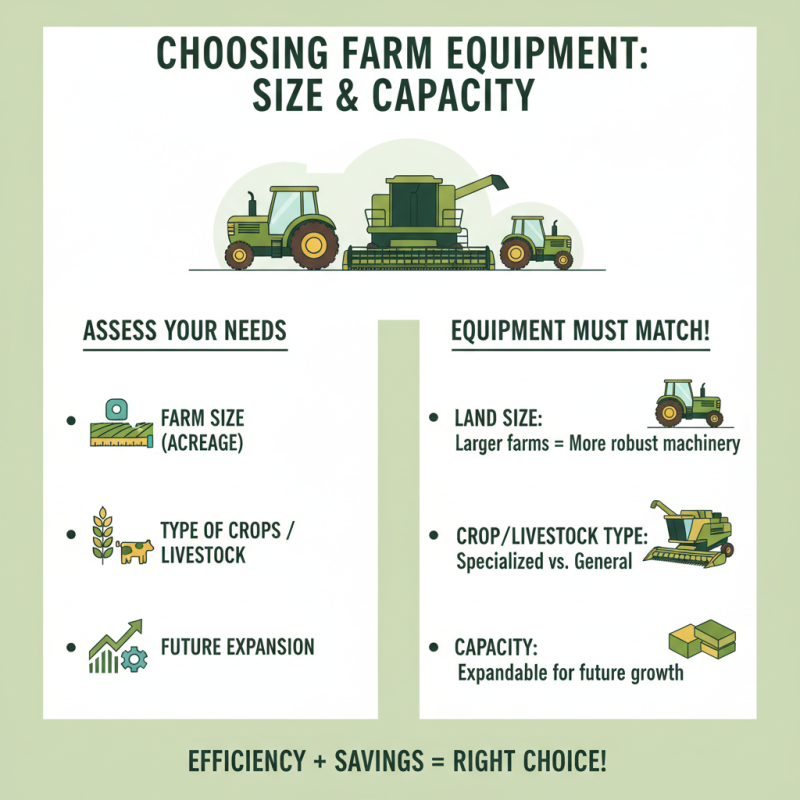
When choosing the right agricultural farm equipment, assessing the size and capacity tailored to your specific farm needs is crucial. Each farm is unique, and so are its requirements, which means that the equipment must match the size of the land and the type of crops or livestock you manage. Consider the acreage you plan to work, as larger farms generally necessitate more robust machinery to handle increased workloads efficiently. It's important to evaluate whether your operations will expand in the future, as investing in equipment with expandable capacity may save costs and time down the line.
Tip: Before making any purchases, measure the areas you need to cultivate and calculate the average yield per crop. This will provide a baseline to determine the optimal equipment size. Additionally, consider the type of terrain on your farm; hilly or uneven surfaces may require specialized equipment that can maneuver effectively.
Another vital aspect is understanding the specific tasks that will be performed by the equipment. This includes planting, cultivating, harvesting, and transportation. Each task may require different functionalities, and a thorough assessment of your routine can ensure the equipment you select has the necessary capacity to handle peak loads.
Tip: Keep maintenance and spare parts availability in mind when choosing equipment. A larger, high-capacity machine might seem appealing, but if it can't be serviced easily or if parts aren't readily available, it could quickly become a liability. Always opt for machinery that offers reliability and support within your region.
Budgeting for Initial Purchase and Ongoing Maintenance Costs
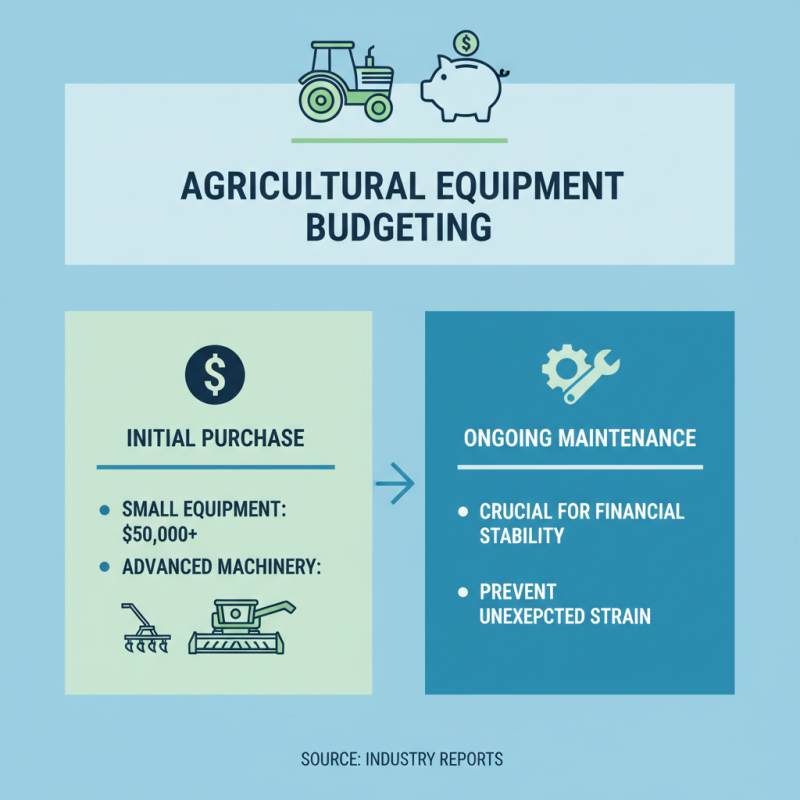
When investing in agriculture farm equipment, budgeting is crucial not only for the initial purchase but also for ongoing maintenance costs. According to industry reports, the average upfront cost for essential farming machinery can vary widely, ranging from $10,000 for smaller equipment to upwards of $500,000 for advanced, multifunctional machines. Understanding these figures helps farmers make informed decisions and avoid financial strain.
One key consideration in your budget is the ongoing maintenance costs. A study by the American Society of Agricultural and Biological Engineers shows that regular maintenance accounts for approximately 10-15% of the total equipment cost annually. This includes service checks, parts replacements, and consumables. To minimize these costs, farmers should invest in equipment that is known for its durability and consider establishing a routine maintenance schedule to prevent unforeseen repairs.
Tips: Always set aside a maintenance fund, ideally 15% of your equipment’s value, to cover unexpected repairs. Additionally, consider training staff on basic maintenance procedures to extend the lifespan of your machinery. Researching and planning your purchases will alleviate budgetary pressures and improve long-term operational efficiency.
Researching Brands and Models for Reliability and Performance
When selecting agriculture farm equipment, researching brands and models for reliability and performance is essential to ensure optimal productivity and efficiency on your farm. According to a report by the Agricultural Equipment Manufacturers Association (AEMA), nearly 60% of farmers consider equipment reliability a top factor in their purchasing decisions. This statistic underscores the importance of investing time in understanding the various options available in the market.
The performance of agricultural equipment can vary significantly depending on its design and engineering. Recent studies have shown that equipment with advanced technologies, such as precision farming capabilities, can enhance yield by up to 30%. This emphasizes the necessity of evaluating models that incorporate innovative features while also considering the long-term reliability of the equipment. Manufacturers with a solid reputation for durability and serviceability tend to outperform those without, making comprehensive brand research critical for any farmer looking to make informed decisions. Engaging with user reviews and performance data can also help guide your selection process, ensuring that the equipment you choose meets your specific agricultural needs effectively.
2025 Agriculture Farm Equipment Performance Comparison