2026 Top Powder Apple Cider Vinegar Suppliers Worldwide

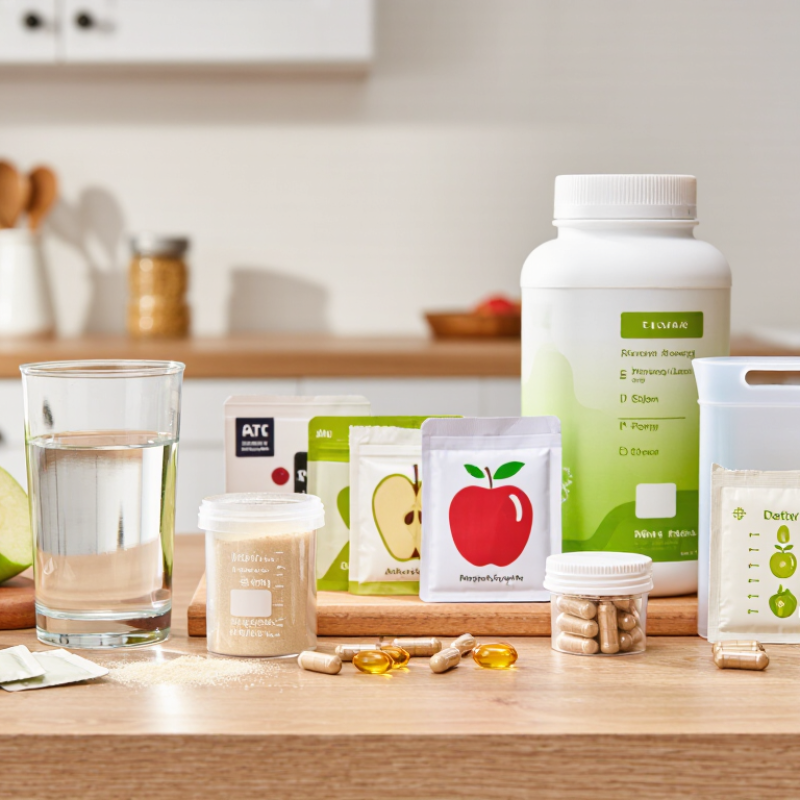
Powder Apple Cider Vinegar is moving from niche supplement shelves into daily nutrition routines worldwide. It appears in sachets, capsules, drink mixes, and functional gummies. Suppliers now compete on acidity, carrier systems, solubility, flavor control, and testing transparency.

Market reports from Grand View Research, Fortune Business Insights, and Future Market Insights show continuing growth across vinegar, dietary supplements, and functional food categories. However, most reports do not separate Powder Apple Cider Vinegar from liquid vinegar or wider supplement markets. That limitation matters. Precise supplier comparisons require more than headline market figures.

Quality begins with the powder itself. A clean product should disperse evenly in cool water, without heavy sediment or an overpowering fermented smell. Buyers should examine acetic acid content, moisture control, microbiological testing, allergen statements, and batch traceability. Certifications can support confidence, but they do not replace independent verification.

Dr. Carol S. Johnston, a leading vinegar researcher at Arizona State University, has cautioned that “vinegar is not a magic bullet.” That reminder remains valuable for suppliers and buyers. Powdered vinegar may improve convenience, yet processing can change taste, stability, and label accuracy. The best global suppliers explain those compromises clearly.

This 2026 guide evaluates leading Powder Apple Cider Vinegar suppliers by manufacturing experience, documentation, formulation capability, quality systems, and international service. Rankings should still be reviewed carefully. A polished website is not proof of dependable production. Real evidence sits in test reports, consistent batches, responsive technical teams, and transparent sourcing.
2026 Top Powder Apple Cider Vinegar Suppliers Worldwide

Apple Cider Vinegar Powder Defined: 5% Acidity Equivalence and Carrier Ratios

Apple cider vinegar powder is not simply liquid vinegar with the water removed. A supplier’s “5% acidity equivalent” usually means the reconstituted powder matches vinegar containing about 5% acetic acid by titratable acidity. It does not mean the powder itself contains 5% free acetic acid. That distinction matters.

Carrier ratios explain much of the commercial variation. A powder may contain one part concentrated vinegar solids and several parts maltodextrin, starch, or another permitted carrier. Suppliers should disclose the exact ratio by weight, moisture content, and reconstitution method.

Without those details, comparing prices can mislead buyers. The powder may look strong, yet deliver weak acidity in a measured serving.

Laboratory verification remains essential. Ask for titratable acidity, pH after reconstitution, water activity, microbiological results, and apple-derived identity testing. pH alone cannot confirm a 5% acidity claim. The AOAC Official Methods framework supports titratable acidity testing for vinegar products, while USDA FoodData Central provides reference data for vinegar composition. Market context also matters: Grand View Research’s 2024 vinegar market assessment identifies continued global growth, driven partly by convenient dry formats. However, market growth does not prove quality. I would treat every carrier declaration as incomplete until the test basis is clear. The wording is often too simple.

2026 Supplier Ranking Metrics: COAs, Moisture Below 5%, and Batch Consistency

2026 Top Powder Apple Cider Vinegar Suppliers Worldwide

A reliable supplier ranking begins with evidence, not attractive catalogs. In procurement reviews, a current Certificate of Analysis (COA) is essential for every production batch. The document should identify the lot number, test date, analytical methods, and specification limits. It should report acidity, pH, microbiological results, heavy metals, and allergen information where relevant.

A generic COA raises questions.

Moisture below 5% is a practical screening target for powder apple cider vinegar. Lower moisture can support better flow, storage stability, and reduced clumping. However, the test method matters. Loss-on-drying and Karl Fischer testing may produce different results.

Buyers should compare the method, sample size, and laboratory identity. Ask for recent results from three separate lots. Small details reveal supplier discipline.

Batch consistency deserves equal weight. Review acidity, color, aroma, particle size, dispersibility, and carrier composition across lots. A supplier that explains variations earns more trust than one claiming perfect uniformity.

I have seen clean spreadsheets hide inconsistent sampling. That weakness deserves attention. Independent laboratory verification can confirm critical claims before a long-term contract.

Factory audits should also examine calibration records, retained samples, warehouse humidity, and traceability from raw material to finished powder. Ranking suppliers by documented performance, not promises, creates a more defensible 2026 purchasing decision.

Global Supplier Regions: North America, Europe, and Asia-Pacific Production Hubs

North America remains a strong production hub for powder apple cider vinegar in 2026. Grand View Research valued the global apple cider vinegar market at approximately USD 1.11 billion in 2023, with continued growth expected through 2030. That forecast mainly covers liquid vinegar. Powder demand is harder to measure.

European suppliers benefit from established nutraceutical manufacturing and strict quality systems. Germany, the Netherlands, and the United Kingdom offer strong logistics links and experienced contract processors. Buyers should check carrier materials, moisture levels, acidity equivalence, microbiological testing, and batch traceability. Certificates alone are not enough.

Asia-Pacific is expanding rapidly, especially through processing centers in China, India, Japan, and Southeast Asia. UN Comtrade data shows strong regional activity in vinegar-related trade, although powder products are not always separated clearly in customs classifications. This makes supplier comparisons imperfect. It also requires careful verification. A reliable supplier should provide recent test results, production capacity, origin records, and storage conditions. Some low-cost offers look attractive, yet unstable powder flow or weak documentation can create expensive formulation problems.

2026 Top Powder Apple Cider Vinegar Suppliers Worldwide

Global Supplier Regions: North America, Europe, and Asia-Pacific Production Hubs

The chart compares regional apple production, an upstream indicator of raw-material availability for apple cider vinegar powder manufacturing. Asia-Pacific represents the largest production base, followed by Europe and North America. Values are rounded estimates for 2022 and do not represent revenue, export volume, or individual supplier market share.

Source: FAOSTAT, Crops and Livestock Products, Apples, 2022; regional values aggregated and rounded in million metric tonnes.

Safety Standards Compared: GMP, HACCP, ISO 22000, and Heavy-Metal Limits

2026 Top Powder Apple Cider Vinegar Suppliers Worldwide

Safety Standards Compared: GMP, HACCP, ISO 22000, and Heavy-Metal Limits

In 2026, powder apple cider vinegar suppliers worldwide face closer safety checks. Buyers should inspect more than certificates. GMP controls hygiene, equipment, personnel, and production records. HACCP focuses on identifying and controlling hazards during processing. ISO 22000 connects food-safety planning with documented management systems. These standards overlap, but they are not interchangeable. A certificate alone proves limited information.

Heavy-metal control deserves direct attention. Ask for batch-specific test reports covering lead, arsenic, cadmium, and mercury. Independent laboratories often use ICP-MS for sensitive detection. Compare results with the destination market’s legal limits, not a supplier’s general statement. Also review sampling dates, laboratory accreditation, and product traceability. Paperwork can look perfect, yet sampling may be weak.

Tips: Request a recent certificate and a matching certificate of analysis. Check the lot number, test method, and production date. Ask how vinegar concentrate becomes powder, especially when carriers or processing aids are used. Store samples in sealed, labeled containers during evaluation. A small mismatch matters. It may reveal recordkeeping problems. Suppliers should explain deviations openly, although explanations still require evidence. During audits, inspect cleaning logs, allergen controls, and complaint records. No single standard guarantees every batch. Consistent verification remains necessary.

Buyer Checklist: MOQ, 24-Month Shelf Life, Lead Time, and Cost per Kilogram

Buying powdered apple cider vinegar in 2026 requires more than comparing quoted prices. Grand View Research projects the global vinegar market to expand at roughly 7% annually through 2030, increasing pressure on capacity and delivery schedules. Ask suppliers to state their minimum order quantity in kilograms, not vague carton counts. A practical trial MOQ may be 100–300 kilograms. Larger contracts can reduce cost per kilogram, but unused powder becomes expensive inventory.

Verify the 24-month shelf-life claim through stability records, batch dates, moisture limits, and packaging specifications. Request samples from different production lots. Powder should arrive free-flowing, without hard lumps or a sharp packaging odor. FAO reports that 13.2% of food is lost before retail, so poor storage and delayed transport deserve serious attention. Require a written lead time covering production, testing, and dispatch. Twelve to twenty-one working days may be reasonable for stocked material, while customized specifications often take longer.

Compare landed cost per kilogram, including packaging, testing, freight, and customs handling. A low factory price can become costly after air shipment or repeated quality failures. Ask for a certificate of analysis, allergen statement, microbiological results, and traceability details. My caution is simple: a perfect spreadsheet can still hide weak forecasting. Recheck demand, because a low MOQ is not automatically a good deal.

2026 Top Powder Apple Cider Vinegar Suppliers Worldwide - Buyer Checklist: MOQ, 24-Month Shelf Life, Lead Time, and Cost per Kilogram
Supplier Region Typical Product Format Standard Apple Cider Vinegar Powder Specification Indicative MOQ 24-Month Shelf Life Typical Lead Time Indicative Cost per Kilogram
(USD, EXW/FOB)
Common Packaging Documentation to Request Buyer Priority
North America Spray-dried powder for dietary supplements and functional foods Food-grade apple cider vinegar solids; commonly standardized by acetic acid content; carrier may include maltodextrin or fiber 100–250 kg Usually available by specification and stability data 4–8 weeks after artwork and deposit approval US$8.00–14.00/kg 15–25 kg multilayer bags or fiber drums with sealed liners COA, allergen statement, non-GMO statement, heavy-metal results, microbiological report, stability evidence Best for regulatory support
Western Europe Premium food and nutraceutical powder Traceable apple-derived ingredient with defined acidity, moisture, bulk density, and microbiological limits 250–500 kg Possible when sealed packaging and validated storage conditions are documented 6–10 weeks US$10.00–18.00/kg 10–20 kg barrier bags, cartons, or drums HACCP or FSSC 22000 certificate, COA, pesticide residue report, allergen control, origin statement Best for premium positioning
China Bulk spray-dried powder for supplements, beverages, and premixes Typical commercial grades with adjustable carrier ratio, acidity, mesh size, and flowability 100–300 kg Frequently quoted as 24 months; confirm real-time or accelerated stability support 4–8 weeks, excluding ocean freight US$4.50–9.00/kg 20–25 kg kraft bags with food-grade inner liners COA, product specification, production-site certification, third-party testing, export documents, sample approval Best for cost efficiency
India Botanical and nutraceutical ingredient powder Apple cider vinegar powder with declared acetic acid equivalent and optional plant-based carrier 100–500 kg Available for selected grades; packaging and humidity controls require confirmation 5–9 weeks US$5.50–10.50/kg 20–25 kg laminated bags or HDPE-lined drums COA, microbial test, heavy metals, pesticide report, BSE/TSE statement, allergen declaration Best for flexible formulations
Southeast Asia Food and beverage powder for private-label applications Spray-dried powder designed for drink mixes, sachets, gummies, and blended functional ingredients 200–500 kg Confirm humidity-controlled storage, desiccant use, and packaging validation 6–10 weeks US$6.00–11.00/kg Barrier bags, vacuum-sealed liners, or lined fiber drums COA, food-safety certificate, shelf-life statement, moisture specification, microbiological analysis Best for regional distribution
Australia and New Zealand Traceable premium powder for health and wellness products Ingredient with strong raw-material traceability, defined moisture level, and documented manufacturing controls 250–500 kg Generally subject to product-specific stability validation 6–12 weeks US$12.00–20.00/kg 10–20 kg barrier bags or sealed drums Country-of-origin evidence, COA, food-safety certification, allergen statement, stability documentation Best for traceability
Latin America Regional food-ingredient powder and custom blend Commercial-grade powder for supplement blends, powdered drinks, and bakery applications 250–500 kg Must be confirmed through the product specification and retained-sample program 6–12 weeks US$6.50–12.00/kg 20–25 kg laminated sacks or lined drums COA, HACCP documentation, origin statement, microbiological report, packaging specification Best for local sourcing
Turkey and Eastern Europe Food-grade powder for nutraceutical and functional-food production Spray-dried vinegar solids with customizable particle size, carrier system, and packaging format 200–500 kg Confirm 24-month claim under stated temperature and relative humidity conditions 5–10 weeks US$7.00–13.00/kg 10–25 kg moisture-barrier bags or drums COA, HACCP or ISO 22000 certificate, allergen statement, heavy-metal report, shelf-life report Best for Europe-adjacent supply
Buyer note: The figures are indicative 2026 market ranges for bulk food-grade apple cider vinegar powder and are not quotations from named companies. Final pricing depends on acetic acid level, carrier ratio, certification, testing, packaging, Incoterms, order volume, and freight. A 24-month shelf-life claim should be accepted only when supported by product-specific stability data and written storage conditions.