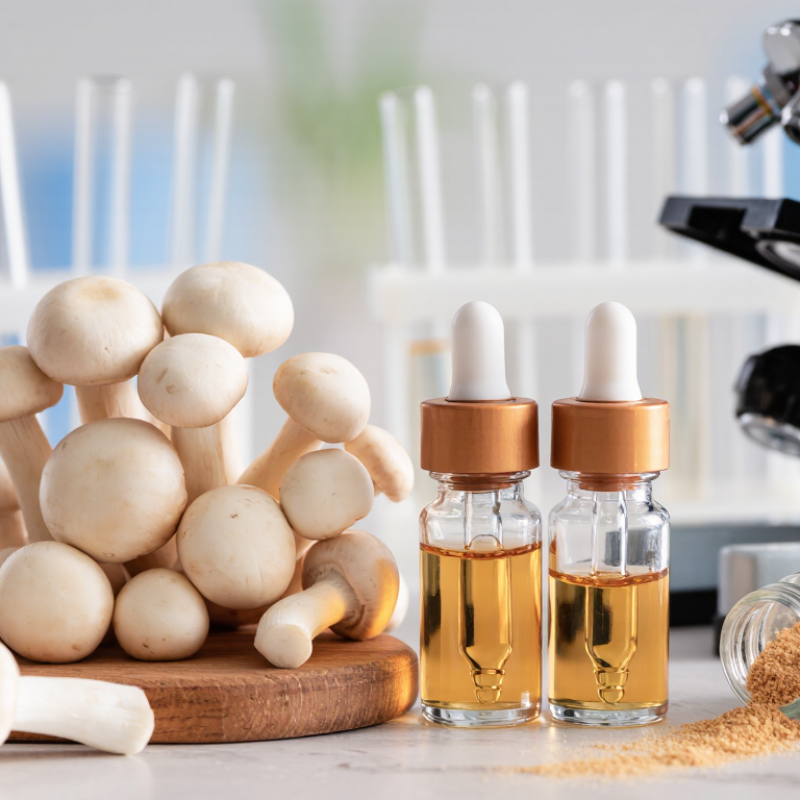
| Definition | A concentrated preparation made from the fruiting body or mycelium of the edible mushroom commonly known as Agaricus blazei. | The species is also frequently discussed under the scientific name Agaricus subrufescens. Extract composition depends on the mushroom part used and the extraction method. |
| Common supplement use | Used as a dietary supplement intended to provide mushroom-derived polysaccharides and other bioactive constituents. | It is commonly supplied as a powder, capsule, tablet, liquid extract, or standardized extract. Products may differ substantially in concentration and labeling. |
| Immune-system research | Investigated for possible effects on innate and adaptive immune responses. | Beta-glucans and related polysaccharides are considered important research constituents. Human evidence remains limited and does not establish the extract as a treatment for disease. |
| Antioxidant research | Studied for its ability to reduce oxidative activity in laboratory testing. | Phenolic compounds and other antioxidant constituents may contribute to observed laboratory effects. Results from test-tube or cell studies cannot be assumed to produce the same effects in humans. |
| Metabolic-health research | Examined in preliminary studies involving glucose regulation, lipid metabolism, and inflammation. | Evidence is not sufficient to determine whether Agaricus blazei extract reliably improves blood glucose, cholesterol, body weight, or other metabolic outcomes. |
| Cancer-related research | Studied as a possible complementary research subject because of its immunological and laboratory findings. | It has not been established as a cancer cure or replacement for oncology treatment. Anyone receiving cancer therapy should consult a qualified healthcare professional before use. |
| Primary active compounds | Beta-glucans and other structural polysaccharides. | These include branched glucose polymers, often described as β-(1→3)- and β-(1→6)-glucans. Their amount and structure vary according to cultivation, processing, and extraction conditions. |
| Protein–polysaccharide complexes | Large molecules containing both carbohydrate and protein components. | These complexes are investigated for biological activity, but their exact composition and activity can differ between extracts. |
| Ergosterol and sterol compounds | Mushroom sterols that occur naturally in the fungal cell membrane. | Ergosterol is a characteristic fungal sterol and may be converted to vitamin D2 when exposed to ultraviolet light. This conversion does not necessarily occur in every extract. |
| Phenolic compounds | Plant-like secondary metabolites found in varying amounts in mushroom material. | Phenolic content may contribute to antioxidant activity measured in laboratory assays, but it is not a reliable indicator of clinical benefit by itself. |
| Nutrients and minor constituents | May include amino acids, peptides, nucleotides, dietary fiber, minerals, and other mushroom metabolites. | The nutritional profile depends on the raw material and whether the product is a whole-mushroom powder or a selective extract. |
| Safety and quality considerations | Use should take account of allergies, possible digestive effects, medication interactions, and product quality. | People who are pregnant, immunocompromised, preparing for surgery, or taking prescription medicines should seek professional advice. A clear supplement label should identify the mushroom material, extraction ratio or standardization, serving size, and testing information. |