How to Choose the Best Farm Cultivation Equipment for Your Needs?
Choosing the right farm cultivation equipment is crucial for maximizing productivity. According to John Green, an agriculture equipment expert, "The right tools can make or break your farming success." Selecting the appropriate machinery involves understanding your specific needs and operational scale.
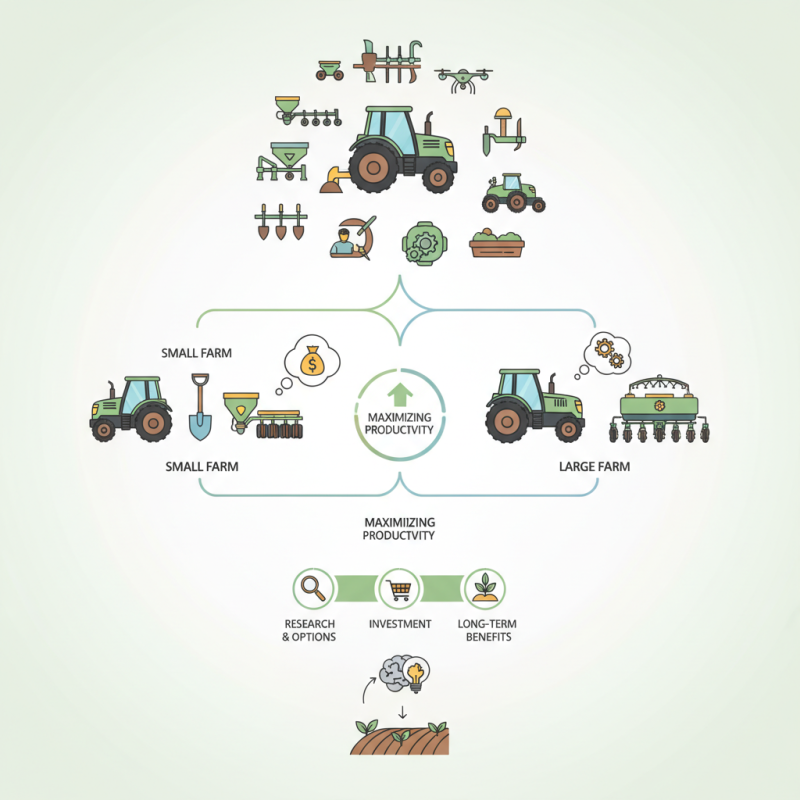
Farm cultivation equipment varies widely, from tractors to seeders. Each piece plays a significant role in crop health and yield. It's essential to assess the size of your farm and your budget. A small farm may benefit from compact, versatile tools, while larger operations might require more advanced technology.
Investing in quality equipment can yield long-term benefits. However, it’s vital to research and consider various options. Mistakes in this area can result in wasted resources and effort. Understanding trends in the industry helps in making informed choices. The right farm cultivation equipment should align with your goals and challenges in the field.
Identifying Your Specific Farming Needs and Goals
Identifying your specific farming needs is essential for choosing the right equipment. Start by assessing your farm's size and the type of crops you grow. Will you need tractors for large fields or handheld tools for smaller gardens? Consider the terrain and climate as well. These factors greatly influence the kind of machinery you'll require.
Think about your farming goals. Are you focusing on increasing yield or improving efficiency? Different objectives will demand different tools. For example, if you aim for organic farming, selecting equipment that minimizes soil disruption becomes vital. Many farmers overlook the importance of matching equipment to their farming philosophy. It’s crucial to evaluate whether the tools align with your long-term vision.
Budget is another key factor. It’s easy to get carried away with the latest technology, but practicality is vital. Can your farm sustain such an investment? Sometimes, used equipment can meet your needs effectively. Reflect on whether more advanced tools truly enhance your results or just add complexity to your operations. Balancing ambition with reality in your decision-making is an important exercise for sustainable farming.
Farm Cultivation Equipment Usage by Type
Understanding Different Types of Farm Cultivation Equipment
When selecting farm cultivation equipment, understanding the diverse types is crucial. Farmers have unique requirements based on their land, crops, and farming techniques. Some common categories include tillers, plows, and seeders. Each type serves a specific purpose, impacting soil health and crop yield. According to the USDA, about 80% of farmers consider soil management as essential for sustainable agriculture.
Tillage equipment, for instance, is vital for preparing land. Different tillers can break up compacted soil and improve aeration. Many studies show that proper tillage can increase crop productivity by 10% to 15%. Conversely, over-tilling may lead to soil erosion and a decline in organic matter. This highlights the need for a careful approach to selecting the right tools.
Seeders, on the other hand, can vary widely. They can be manual or mechanical, impacting planting speed and accuracy. Reports suggest that precision seeders can increase planting efficiency by up to 30%. Low accuracy in seeding can lead to uneven crop growth, which is not desirable. It's essential to assess one's priorities: efficiency versus cost, or technology versus tradition. Each decision shapes the future of the farm.
Evaluating Equipment Features and Specifications
When evaluating farm cultivation equipment, it's crucial to focus on specific features and specifications that meet your unique needs. Assessing the power source is a key factor. Do you require gas, electric, or solar options? Each provides different efficiency levels and maintenance requirements. Think about your farm size and soil type. For larger areas, equipment with higher output is essential. Conversely, smaller farms can benefit from compact machines that allow for precision work.
Durability also plays a significant role. Inspect the materials used in construction. Are they resistant to wear and tear? This can impact long-term costs. Features like adjustable settings or multi-function capabilities can enhance versatility. Some equipment may appear high-tech but lack user-friendly interfaces. The learning curve can be steep in such cases. This often leads to frustration and underutilization of the equipment.
Additionally, consider the weight and maneuverability of the machinery. Heavier equipment may seem robust, but can it navigate your farm's layout? Compact machines can easily access tighter spaces, allowing for more efficient cultivation. Check customer reviews for real-world performance and reliability. Look for patterns, as discrepancies in feedback may reveal underlying issues. Balancing all these factors will lead to a more informed decision.
How to Choose the Best Farm Cultivation Equipment for Your Needs?
| Equipment Type |
Key Features |
Specifications |
Efficiency Rating |
| Tractor |
Powerful engine, multi-purpose, versatile attachments |
60-100 HP, 4-wheel drive, 3-point hitch |
85% |
| Plow |
Adjustable depth, durable blades, easy attachment |
2-5 furrows, adjustable width |
90% |
| Seeder |
Precision seeding, reduced seed waste, adjustable rate |
Row spacing: 6-12 inches, seed capacity: 20 lbs |
92% |
| Harrow |
Breaks up soil clumps, levels the seedbed, enhances aeration |
Width: 6-12 ft, adjustable teeth |
88% |
| Irrigation System |
Automated scheduling, drip or sprinkler options, water-efficient |
Coverage area: 1-10 acres, pump capacity: 2000 GPH |
95% |
Considerations for Budget and Cost-Effectiveness
When selecting farm cultivation equipment, budget and cost-effectiveness are crucial. According to a report by the American Society of Agricultural and Biological Engineers, up to 30% of a farm's operational budget is spent on equipment. This shows how vital it is to assess your financial limits before making any purchases.
Investing in high-efficiency machinery can lead to long-term savings. For instance, equipment that reduces fuel consumption by just 5% can save a farm thousands over its lifespan. However, it's essential to carefully evaluate initial costs versus long-term benefits. Some equipment may seem affordable upfront but require extensive maintenance, leading to increased overall expenses.
Farmers should also consider the potential resale value of equipment. A well-maintained tractor might hold 60% of its value after several years, unlike cheaper options that depreciate rapidly. Therefore, choosing reliable equipment can be an investment rather than an expense. Balancing budget constraints with the need for quality gear can be challenging but necessary for sustainable farming.