Top Wholesale Cement Brick Machines for Global Buyers?
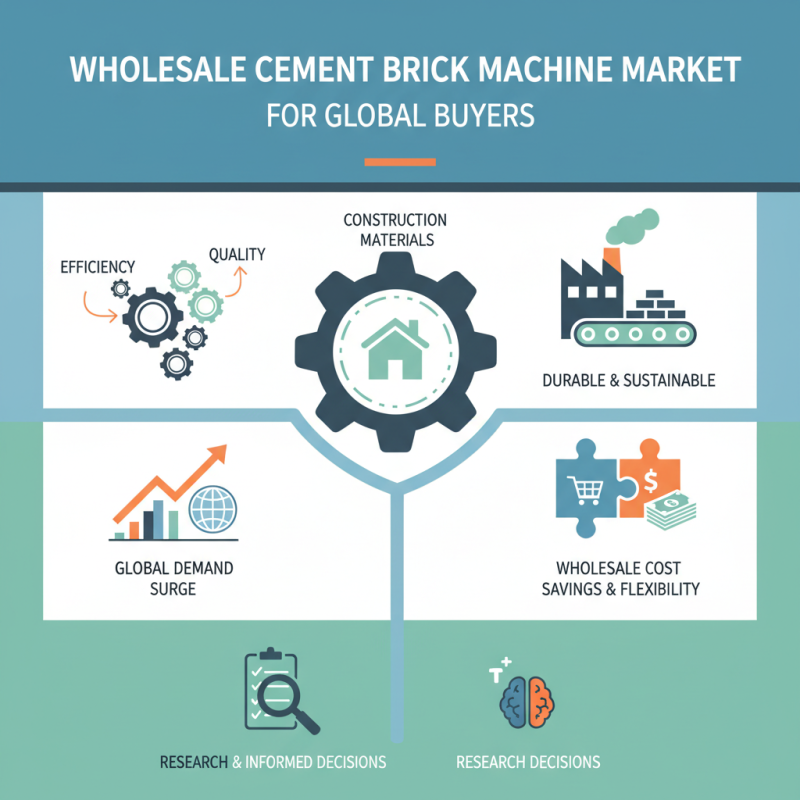
In the competitive landscape of the construction materials market, the importance of choosing the right equipment cannot be overstated. As a leading Cement Brick Machine Wholesaler, James Roberts emphasizes the significance of quality and efficiency. "Investing in reliable machinery is essential for success in the cement brick industry," he states. With a surge in global demand for cement bricks, selecting top-notch machinery has become critical for manufacturers looking to expand their market reach.
Cement brick machines are pivotal in producing durable and sustainable construction materials. They cater to a growing industry that prioritizes eco-friendly practices and efficiency. Industry experts agree that the right machine can drastically reduce labor costs and enhance production speed. Many buyers are now exploring wholesale options to benefit from cost savings and flexibility.
However, it's not always straightforward. Not every wholesaler guarantees top-quality machines. Prospective buyers must conduct thorough research and read reviews. Ultimately, understanding one’s needs and the specific strengths of a Cement Brick Machine Wholesaler is vital for making an informed decision. The landscape is evolving, and innovation in machine technology continues to shift the standard. Making wise choices will determine success in this demanding market.
Top Features to Consider in Wholesale Cement Brick Machines
When considering wholesale cement brick machines, specific features can significantly impact performance and efficiency. Buyers should focus on the machine's production capacity. A higher capacity results in more bricks produced in less time. Efficiency is key, especially for large-scale operations. Buyers must check the energy consumption of the machines. Lower energy costs can enhance profitability, making the investment more attractive.
Durability and build quality are critical features. Machines made from high-quality materials often last longer and require less maintenance. This can save money and time in the long run. Additionally, ease of operation should not be overlooked. Complex machinery can lead to frustration and slow production. A user-friendly interface increases productivity and minimizes training time.
Another important feature is the level of automation. Fully automated machines can reduce labor costs, but they may come with a higher initial investment. Evaluating the balance between automation and cost-efficiency is essential. Some manufacturers offer partially automated solutions that might better suit specific needs. Each feature impacts the machine's overall value, and careful consideration is necessary for making the right choice. Non-ideal choices may lead to problems and inefficiencies down the line, highlighting the importance of thorough research before purchasing.
Types of Cement Brick Machines Available for Global Buyers
Cement brick machines come in various types, catering to the diverse needs of global buyers. These machines can be categorized based on their functionality, production capacity, and automation level. Manual machines require more labor but are cost-effective. Semi-automatic machines streamline the process, increasing output while minimizing human error. Fully automatic machines, though a higher investment, provide consistent quality and efficiency.
When choosing a machine, consider your production needs. Determine the daily output required. Also, evaluate the space available for installation. Each type of machine has its operational nuances that buyers should understand. This awareness can prevent costly mistakes and ensure seamless production.
Tips: Ensure proper training for operators, even for semi-automatic machines. This oversight can significantly improve workflow efficiency. Additionally, invest time in researching maintenance needs. Machines require regular upkeep to avoid unexpected downtime. Finally, consider visiting manufacturers to gain insights into machine functionality. Engaging directly with experts can reveal the machine's true potential and limitations.
Key Manufacturers of Cement Brick Machines Worldwide
The global market for cement brick machines is diverse and competitive. Key manufacturers play a significant role in shaping this landscape. These companies focus on providing reliable and efficient machines that meet various construction needs. They emphasize innovation and quality, often integrating new technologies to enhance productivity.
Many manufacturers specialize in different machine types, from manual to fully automatic models. Some are known for their superior hydraulic systems. Others excel in energy efficiency, reducing operational costs for buyers. The choice of manufacturer can significantly influence the performance and longevity of the equipment. It's essential for buyers to assess their requirements carefully.
However, challenges persist in the industry. Some machines may not meet local standards, leading to potential issues in compliance. Additionally, there can be gaps in customer support services. These factors highlight the importance of thorough research before purchasing. Buyers should consider not only the machine's features but also its adaptability to their unique needs.
Global Cement Brick Machine Production Capacity
Cost Analysis: Investment in Wholesale Cement Brick Machines
Investing in wholesale cement brick machines is increasingly appealing for global buyers. The market has witnessed significant growth, with reports indicating a CAGR of approximately 5.4% in recent years. This growth reflects the rising demand for sustainable building materials. However, potential investors need to analyze costs thoroughly.
The initial investment can vary widely. Basic models start at around $15,000, while high-capacity machines may exceed $100,000. Operational costs often include electricity, maintenance, and labor. A well-researched ROI can often be achieved within 1-3 years, depending on demand and efficiency. Nonetheless, unexpected repairs can lead to increased costs, sometimes outpacing profits.
Moreover, market fluctuations impact pricing. Global supply chain issues can raise equipment costs unpredictably. As cement prices increase, the profit margins for brick manufacturers may shrink. Understanding these dynamics is essential. It is crucial to evaluate both the risks and potential returns before making a commitment. Making informed decisions is key to navigating this complex market landscape.
Top Wholesale Cement Brick Machines for Global Buyers
| Machine Type | Production Capacity (bricks/hour) | Power Consumption (kW) | Price Range (USD) | Return on Investment (months) |
| Semi-Auto Brick Machine | 800 | 15 | 5,000 - 10,000 | 6 |
| Fully Automatic Brick Machine | 1200 | 25 | 20,000 - 40,000 | 8 |
| Interlocking Brick Machine | 600 | 10 | 7,000 - 15,000 | 7 |
| Mobile Brick Machine | 500 | 8 | 3,000 - 6,000 | 5 |
Trends in the Cement Brick Machine Market for 2023
The cement brick machine market is experiencing significant shifts in 2023. Growing demand for sustainable construction materials drives innovation in the industry. Manufacturers are focusing on eco-friendly practices. This includes using recycled materials and optimizing energy efficiency. As a result, the machines are becoming more versatile. Buyers now seek machines that can produce different types of bricks.
Technological advancements play a crucial role in these trends. Automation is on the rise, improving production speed and accuracy. Smart technologies empower operators with real-time data. Lower labor costs are an attractive feature for many buyers. However, these changes also introduce challenges. Companies must adapt to new technologies while ensuring quality. This requires a skilled workforce and ongoing training.
Global buyers are increasingly cautious. They want reliable suppliers who offer support and expertise. Longevity and serviceability of machinery are critical factors in decision-making. Businesses face pressure to balance cost and quality. As the market evolves, adaptability becomes essential for success. This landscape demands constant evaluation and strategic thinking.