Global purchasing is changing the way manufacturers source flexible intermediate bulk containers. Bulk Fibc Bag Suppliers can combine larger production runs, standardized specifications, and coordinated international shipping. These advantages matter when a factory receives thousands of bags for powder, grain, minerals, or food ingredients.
Market reports support this demand. Grand View Research estimates that the global FIBC market will continue expanding through the decade, driven by agriculture, chemicals, construction, and food processing. MarketsandMarkets also identifies reusable transport packaging and industrial bulk handling as important growth factors. The figures differ slightly. That is a useful warning: market forecasts are estimates, not guarantees.
“Bag safety begins with the correct design, testing, and handling process,” says David Walsh, an FIBC industry specialist associated with the Flexible Intermediate Bulk Container Association. His point is practical. A low unit price means little if bags arrive with inconsistent dimensions, weak lifting loops, or unclear load documentation.
Experienced Bulk Fibc Bag Suppliers usually provide pre-production samples, fabric specifications, safe working load records, and batch traceability. They can also coordinate woven polypropylene grades, liners, printing, discharge spouts, and pallet patterns. Those details become visible on the warehouse floor: bags must stack evenly, lift smoothly, and fit the filling equipment without awkward gaps.
Still, bulk purchasing is not automatically the best decision. Forecasting errors can create expensive storage, while rushed specifications may cause delays. Buyers should compare audited quality systems, independent testing, production capacity, and communication practices before signing global contracts. Reliable sourcing is less about ordering the largest quantity. It is about reducing surprises from factory floor to final delivery.
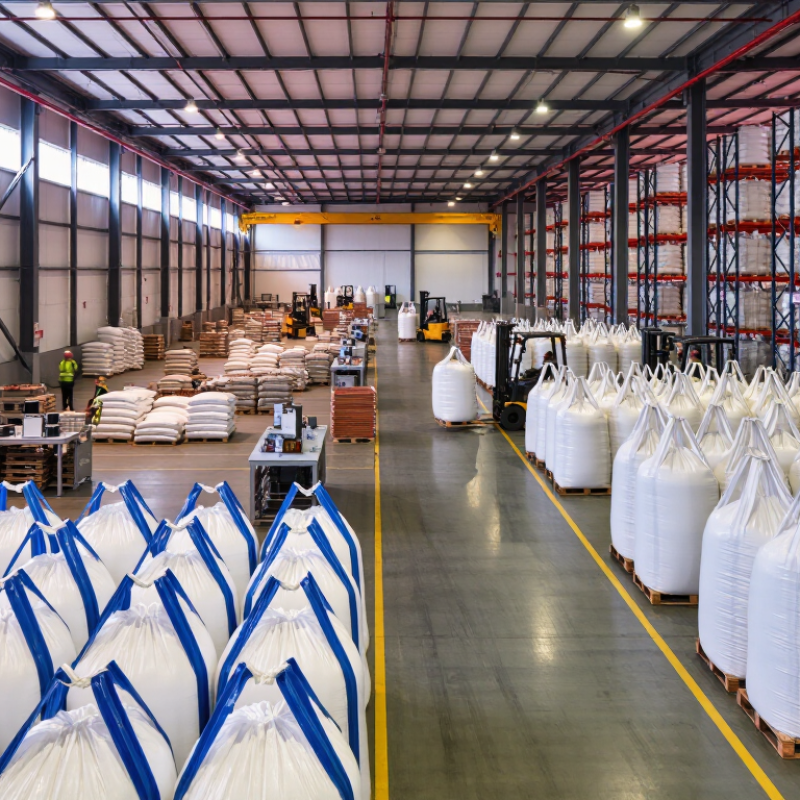
Bulk FIBC bags are flexible intermediate bulk containers designed to hold and move dry, flowable materials. They are commonly made from woven polypropylene and fitted with lifting loops, filling openings, and discharge spouts. One bag can carry hundreds or thousands of kilograms, depending on its construction and certification. That capacity reduces handling time and makes warehouse storage more practical.
Global industries use FIBC bags for grains, minerals, powders, fertilizers, plastic pellets, and construction materials. Their square shape helps cargo fit closely inside containers and trucks. Empty bags can also be folded into compact bundles, which lowers return-shipping volume. In real logistics work, these details matter. A damaged loop or poorly fitted liner can interrupt loading and create avoidable losses. Small choices matter.
Experienced bulk FIBC bag suppliers usually ask about material density, filling methods, discharge speed, moisture exposure, and transport conditions. They may recommend coated fabric, an inner liner, dust-control features, or different lifting designs. Reliable suppliers should provide test records, load ratings, dimensions, and production samples before large orders. Still, bulk purchasing is not automatically efficient. Incorrect specifications can leave a buyer with expensive bags that do not suit the product or equipment. A careful inspection plan remains necessary, even when the order appears straightforward.
| Data Dimension | Typical Data | Why It Matters for Global Orders |
|---|---|---|
| Product Definition | Flexible Intermediate Bulk Container (FIBC), also called a bulk bag or jumbo bag | Provides a standardized way to package, handle, store, and transport dry bulk materials. |
| Main Material | Woven polypropylene fabric, commonly with a laminated or unlaminated surface | Polypropylene offers a strong, lightweight, moisture-resistant structure suitable for many dry products. |
| Typical Safe Working Load | Approximately 500–2,000 kg per bag, depending on design and certification | The required load rating helps buyers match the bag to the product weight and handling equipment. |
| Common Capacity by Volume | About 0.5–2.0 m³, with exact capacity determined by dimensions and product density | Volume selection supports efficient container utilization and reduces unnecessary shipping space. |
| Safety Factor | Common ratings include 5:1 for single-trip use and 6:1 for reusable designs | The safety factor indicates the relationship between the bag’s tested breaking load and its rated working load. |
| Typical Bag Dimensions | Common footprints range from approximately 85 × 85 cm to 95 × 95 cm; height varies by capacity | Standardized footprints simplify palletizing, warehouse storage, and filling-line compatibility. |
| Lifting Options | Four corner loops, cross-corner loops, sleeve loops, or specialty lifting configurations | The lifting design must match forklifts, cranes, filling systems, and unloading procedures. |
| Filling and Discharge | Top options include open top, duffle top, or filling spout; bottom options include flat bottom, discharge spout, or iris closure | The correct configuration reduces product loss and improves filling and controlled discharge efficiency. |
| Product Compatibility | Used for grains, seeds, feed, minerals, chemicals, powders, construction materials, and recycled products | A supplier can recommend fabric, coating, liner, and closure features according to product properties. |
| Liner Requirement | Optional polyethylene or polypropylene liners are used when enhanced moisture, dust, or contamination protection is required | Liners can improve product protection during long-distance and multi-modal transportation. |
| Available Surface Treatments | Laminated, coated, breathable, antistatic, conductive, or UV-treated fabric options | Special treatments help address dust control, static electricity, outdoor exposure, and moisture sensitivity. |
| Regulatory Consideration | UN-tested FIBCs are available for certain dangerous goods; food-contact applications may require applicable compliance documentation | Documentation and testing requirements vary by product, destination, and transport regulations. |
| Storage Efficiency | Empty FIBCs can be folded and stored in a compact form compared with rigid bulk containers | Reduced empty-storage volume can lower warehouse requirements and handling costs. |
| Transport Advantages | Lightweight construction, stackable design, and high product-to-packaging weight ratio | These characteristics support efficient ocean, rail, road, and containerized freight operations. |
| Supplier Selection Criteria | Specification control, load testing, material traceability, export packaging, inspection, and documentation | A qualified bulk FIBC supplier can help maintain consistent quality across repeated international shipments. |
| Best Practice Before Ordering | Confirm product density, bag dimensions, safe working load, filling method, discharge method, liner, certification, and destination requirements | Accurate specifications reduce fit problems, compliance risks, product contamination, and delays at the receiving site. |
Note: FIBC specifications vary by application. Safe working load, safety factor, certification, and food-contact suitability should be verified against the final technical specification and destination regulations.