Farmers choose Neutral Silicon Fertilizer for practical reasons, not because one product suits every field. They may value a formulation designed to supply plant-available silicon while having limited influence on soil pH. That distinction matters where soils already sit near a preferred pH range. It also matters when growers want to avoid unnecessary changes to nutrient availability. Product labels still deserve a close read. “Neutral” can describe a formulation, but it does not guarantee identical performance across soils or crops.
Silicon researcher and plant pathologist Lawrence E. Datnoff has studied silicon’s role in crop health. A fair paraphrase of his research is: “Silicon may support crop resilience, but it is not a cure-all.” Farmers should weigh that carefully. Silicon’s effects can depend on crop species, soil conditions, application rate, and product quality. A grower comparing treated and untreated rows may notice differences in plant strength or stress response, but one season is not proof. Field records help.
This outline explores why farmers consider Neutral Silicon Fertilizer, how it may fit into a soil program, and what to check before application. The useful details are concrete: soil tests, label directions, crop needs, and observed results. Not every field responds alike. That can be frustrating. It also means sound decisions rely on evidence from the farm, not broad promises. A small amount of uncertainty remains, and growers should acknowledge it.
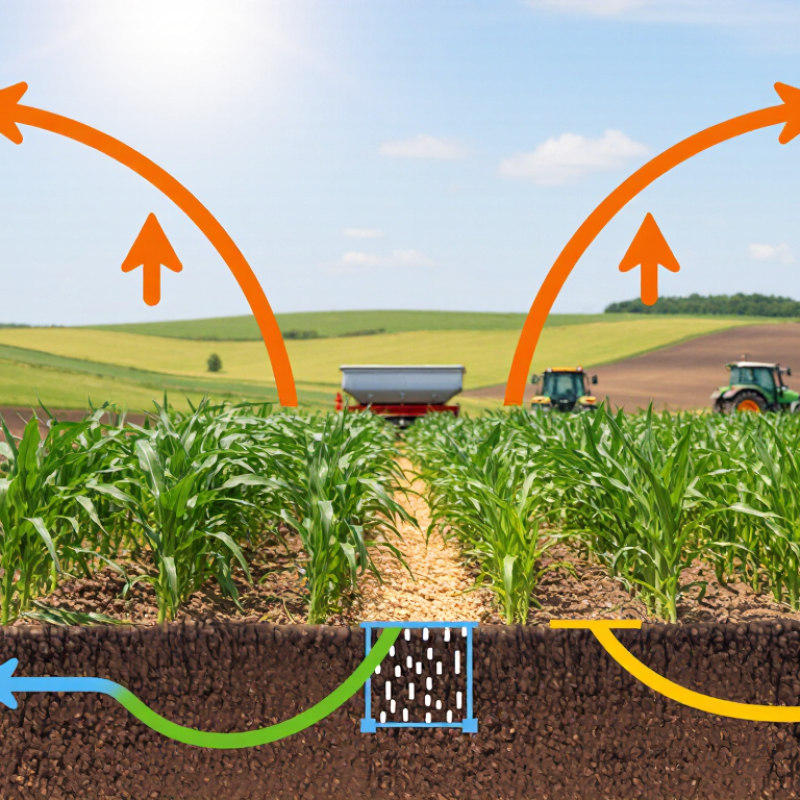
Neutral silicon fertilizer is a silicon-containing soil or foliar input designed to supply plants with available silicon without substantially shifting the growing medium’s pH. “Neutral” is not a universal technical guarantee, so farmers should check the product’s pH information and ingredient analysis. Plants mainly absorb silicon in a soluble form, then deposit it in tissues such as leaves and stems. The result is not a visible coating. It is part of the plant’s structure.
Why does that matter? In some crops, adequate silicon is associated with firmer tissues and better tolerance of stresses such as drought or disease pressure. Results vary with crop, soil, and application method. A farmer might choose a neutral formulation when soil pH is already carefully managed, especially in a greenhouse or a sensitive crop rotation. Still, silicon does not replace nitrogen, phosphorus, or potassium. It also cannot repair poor drainage or uneven irrigation. A small field trial, with untreated rows for comparison, can reveal whether the input helps under local conditions. I would be cautious about expecting a dramatic change; the response may be modest, or absent.
A neutral-pH silicon fertilizer is formulated close to pH 7. That does not mean it will make acidic or alkaline soil neutral. It simply reduces the chance that the product itself will sharply shift pH when used as directed. Small differences matter. In a field with sensitive crops or a narrow pH range, that can make product selection less disruptive.
Soil compatibility still depends on more than the number on the label. Soil texture, irrigation water, existing nutrients, and application rate all influence how a fertilizer behaves. For example, a grower applying it through drip lines should check whether the product dissolves fully and whether the water contains minerals that could cause deposits. Check the water, too. A neutral formulation is not automatically compatible with every tank mix or irrigation system.
A soil test offers a useful starting point, especially before repeated applications. Compare the field’s pH and crop needs with the product’s directions, then test a small area if conditions are unusual. Keep notes on application rate, timing, and visible crop response. I would not assume that neutral pH guarantees better growth; silicon response varies by crop and soil, and a promising result in one plot may not repeat elsewhere.
Neutral silicon fertilizer is used to supply plants with silicon while aiming to limit sharp changes in soil pH. Its value is not simply faster growth. In crops that absorb silicon, the element can accumulate in stems and leaves, helping tissues stay more upright and better withstand some stresses. The effect varies by crop, soil, and growing conditions. A rice field and a tomato bed may not respond alike.
As plants develop, stronger tissues can help reduce lodging and may improve tolerance to drought, heat, or disease pressure. Silicon does not replace balanced nutrition, irrigation, or pest management. It is support, not a shield. Results can be uneven, and that is worth considering before changing a whole field’s routine. A small, monitored trial can reveal whether plants respond under local conditions.
Tips: Check soil conditions and the product label before application. Match the rate to the crop and growth stage. Keep notes on treated and untreated rows, including plant height, lodging, and yield. Don’t judge results from appearance alone; weather and other nutrients may influence what you see.
Farmers choose neutral silicon fertilizer when they want to add silicon without making soil pH the main concern. A near-neutral product may fit more easily into an existing nutrient plan, especially where soil tests already guide lime and fertilizer decisions. Check the product’s analysis and application directions; “neutral” does not mean every soil or crop will respond the same way.
Silicon can support stronger plant tissues and help some crops cope with stresses such as heat or limited water. The response depends on crop type, soil conditions, and available silicon. Rice, for example, often benefits more clearly than crops that take up little silicon. Look for practical signs, not promises: sturdier stems, fewer lodging problems, or more even growth across a field. Small differences matter.
Good records help. Compare treated and untreated strips, note the rate, and keep soil and crop conditions similar. It takes patience. A single season may not settle the question, and I would not treat silicon as a substitute for balanced nutrition or irrigation. Farmers choose neutral formulations for manageable handling and compatibility, but testing remains essential. Even a sensible choice can disappoint when timing or crop need is wrong.
| Consideration | Why It Matters to Farmers | Potential Practical Value | Important Limitation |
|---|---|---|---|
| Near-neutral formulation | Some farmers prefer a product formulated near neutral pH when they want to avoid adding a strongly acidic or alkaline material during application. | May fit into fertilizer programs where managing solution pH or minimizing changes from an amendment is a consideration. | Product pH does not by itself determine its effect on soil pH. Check the product label, application rate, and soil test results. |
| Plant structure and lodging | Plants can take up silicon and deposit it in tissues. Research has found structural benefits in some crops, including improved resistance to lodging under suitable conditions. | Could be useful for crops or fields where lodging risk is a concern, as part of an overall crop-management plan. | Results vary by crop, variety, soil silicon availability, weather, and application method. Silicon is not a substitute for appropriate crop management. |
| Environmental stress management | Studies report that silicon may help some plants cope with stresses such as drought, salinity, or certain metal toxicities. | Farmers may consider it as one component of a broader strategy for fields exposed to recurring stress. | Responses are not guaranteed and depend on the crop and growing conditions; it does not remove the underlying cause of stress. |
| Compatibility with a fertilizer program | Farmers often evaluate whether a silicon source can be incorporated into existing application schedules and equipment routines. | A suitable product may simplify planning when its approved application method fits the farm’s practices. | Compatibility depends on the specific formulation. Follow label directions and check mixing instructions before combining products. |
| Nutrient-management planning | Silicon is generally treated as a beneficial element rather than an essential nutrient for all higher plants, so its use is often considered alongside crop and soil needs. | Soil or tissue information can help farmers decide whether silicon is relevant to a particular crop and field. | Testing methods and interpretation differ. Consult locally appropriate recommendations rather than assuming every field needs silicon. |
| Handling and application considerations | Product form, solubility, storage needs, and application timing can affect whether a fertilizer is practical for a farm. | Farmers can compare products based on their equipment, labor, storage, and timing requirements. | These properties vary by formulation; review the label and safety information for the specific product being considered. |
Note: Neutral silicon fertilizers are not a single standardized product category. Benefits and suitability depend on formulation, crop, soil conditions, and local recommendations. Use product-label directions and soil-test information when making application decisions.
Farmers often consider neutral silicon fertilizer when they want to supply silicon without strongly shifting soil pH. The choice still depends on crop, soil conditions, and product formulation. Neutral does not automatically mean more effective. A soil test and local agronomic advice can help show whether silicon is likely to be useful.
Product selection calls for more than a pH claim. Check the stated silicon content, solubility, application method, and any carrier ingredients. These details affect how easily the material can be applied and whether it suits a field’s equipment. A fine powder may mix differently from a liquid concentrate. Read the label carefully, and avoid assuming that products with similar names work alike. Small differences matter.
Application timing and rate should match the crop and label directions. Farmers may compare a treated strip with an untreated area, then record crop condition, weather, and yield. Keep notes. Results can vary between seasons, and one successful trial is not proof of a universal benefit. There is also a practical trade-off: a fertilizer may fit the soil profile but cost more to store or spread. That part is easy to overlook. Review the evidence before expanding use across a whole field.