2026 Best Farm Cultivation Equipment for Global Buyers?
Choosing the best farm cultivation equipment in 2026 requires more than comparing horsepower, prices, or polished product photos. Global buyers need machines that match soil conditions, crop systems, field size, labor availability, and local service capacity. A compact tractor may perform well on narrow vegetable beds, while a heavy disc harrow suits larger fields with firm, residue-covered soil. The right choice depends on evidence from real operating conditions.
This guide examines practical equipment for soil preparation, planting, tillage, and field maintenance. It considers fuel efficiency, working width, adjustment options, operator safety, spare-parts access, and compatibility with existing farm machinery. Manufacturer specifications matter. So do dealer training, warranty terms, maintenance records, and independent field experience. A low purchase price can become expensive when imported parts remain unavailable for weeks. Small details matter.
No machine is perfect.
Regional differences can change the result. A cultivator designed for dry European soil may struggle in wet tropical fields. Hydraulic systems, tire patterns, corrosion protection, and transport dimensions deserve careful review before purchase. Certification and import requirements must also be checked with qualified local authorities. Some recommendations may need revision as prices, technologies, and climate conditions change. That is worth admitting. Reliable decisions come from testing performance, verifying documentation, and comparing total ownership costs rather than trusting marketing claims. This 2026 overview helps buyers build a more informed shortlist of farm cultivation equipment for productive, compliant, and sustainable operations.
2026 Farm Equipment Classes for 4.8 Billion ha of FAOSTAT Agricultural Land
2026 Best Farm Cultivation Equipment for Global Buyers?
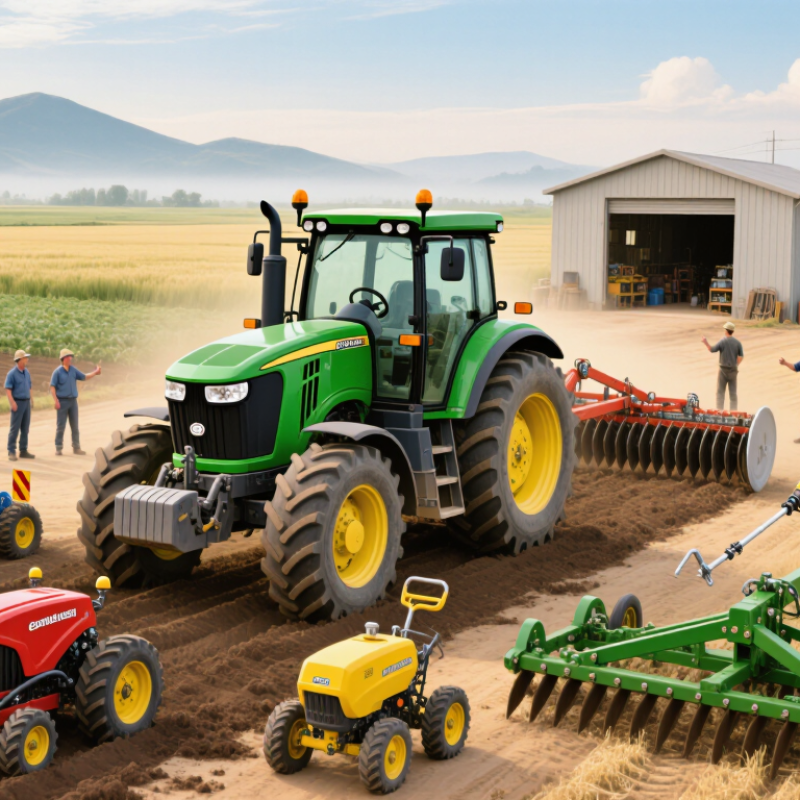
FAOSTAT records approximately 4.8 billion hectares of agricultural land worldwide. This vast area includes rain-fed fields, irrigated farms, pasture, and mixed smallholdings. Equipment selection must match local soil, climate, and farm scale. Tractors remain the core class, supporting tillage, transport, seeding, and harvesting attachments. However, horsepower alone is a weak buying guide. Tire pressure, fuel access, repair skills, and field width often matter more.
The main equipment classes include ploughs and disc harrows, seed drills, precision planters, sprayers, irrigation systems, forage machines, combines, and post-harvest dryers. For livestock regions, feed mixers, balers, and manure-handling equipment deserve equal attention. OECD-FAO Agricultural Outlook 2024-2033 projects global agricultural and fish production to rise about 1.1% annually, with most growth coming from better yields and increased cropping intensity. That trend supports efficient planting, monitoring, and harvesting systems.
Small farms need flexible implements. Large farms need capacity and uptime.
Different priorities. The FAO State of Food and Agriculture reports repeatedly connect productivity with appropriate technology, not simply expensive machinery. Buyers should examine total operating cost, spare-part availability, operator training, and soil compaction risk. I would avoid assuming that automation always improves results. A sophisticated machine can fail economically when local technicians lack diagnostic tools. Field trials are still essential, and published specifications rarely reveal every maintenance problem.
Tractor Sizing by Farm Scale: ASABE Power, Drawbar, and PTO Standards
Choosing farm cultivation equipment starts with the field, not the tractor brochure. ASABE standards help buyers compare rated power, drawbar performance, and PTO output. These measurements describe different jobs. PTO horsepower drives rotary tillers, pumps, and mowers. Drawbar power moves plows, rippers, and loaded trailers through soil. Engine horsepower alone can hide important losses.
Small farms often need a compact tractor with steady PTO power and precise hydraulic control. For larger fields, buyers should calculate implement width, soil resistance, travel speed, and daily working hours. A heavy clay field may demand far more drawbar power than a dry sandy field. Tire size, ballast, transmission efficiency, and four-wheel drive also change real performance. Numbers matter.
A practical check is to match the implement’s minimum PTO requirement, then leave a reasonable power reserve. Do not size only for the biggest attachment. It may increase fuel use and soil compaction. Real fields refuse perfect spreadsheets. I would measure one representative plot before ordering equipment. Note wheel slip, engine load, working depth, and time per hectare. These observations support a more reliable purchase than a single advertised horsepower figure. ASABE terminology improves communication with suppliers, but local testing still matters. A rating is useful, not magical.
Precision Tillage and Seeding: USDA Data on Fuel and Input Efficiency
2026 Best Farm Cultivation Equipment for Global Buyers?
Precision Tillage and Seeding: USDA Data on Fuel and Input Efficiency
USDA field research shows that reduced tillage can lower fuel demand and protect soil structure. The result depends on soil type, residue levels, and weather. It is not a guaranteed saving.
A practical system starts with accurate soil maps and field records. These tools help operators vary tillage depth across compacted zones. Shallow passes often use less diesel than deep, uniform cultivation. Yet shallow tillage can leave weeds or uneven seedbeds. That trade-off requires local testing.
Precision seeders place seeds at consistent depth and spacing. Better placement can reduce missed plants and unnecessary seed use. USDA conservation guidance also supports residue management for moisture retention. In dry regions, this may reduce irrigation pressure. In wet fields, excessive residue can delay warming.
Measure fuel per hectare, seed use, emergence rate, and final yield. Simple records reveal whether expensive precision functions create real value. Calibration matters more than impressive specifications. A worn opener can ruin placement quickly.
Global buyers should request field-test data under comparable soil conditions. Ask about service access, operator training, and replacement parts. These details affect lifetime efficiency. I would not trust a claimed fuel reduction without baseline records. Farm results can look excellent on paper and disappoint during a difficult season.
2026 Best Farm Cultivation Equipment for Global Buyers?
Precision Tillage and Seeding: USDA Data on Fuel and Input Efficiency
Reduced-tillage and no-till systems generally lower diesel consumption and the number of field passes required before seeding. The benchmark values shown are representative U.S. planning figures based on USDA NRCS conservation-practice guidance and tillage-energy estimation methods. Actual results vary with soil type, tractor power, implement width, field conditions, and crop system.
Source: USDA Natural Resources Conservation Service, tillage energy and conservation-practice planning guidance. Values are planning benchmarks, not company or brand performance claims.
Global Buying Checklist: OECD Trade Data, CE/ISO Compliance, and Total Cost of Ownership
For global buyers, the best farm cultivation equipment is not always the most powerful model. A practical 2026 shortlist begins with OECD trade data. Check HS codes, export volumes, import values, and destination trends. These figures show market direction, not your final invoice. They can hide seasonal prices, bundled accessories, or unusual shipping routes. Verify three years, then compare supplier quotations against local customs records. Small detail, big difference.
Ask for a complete compliance file before discussing volume. CE marking should match applicable European requirements and include a valid Declaration of Conformity. ISO references need careful reading. An ISO 9001 certificate concerns management systems, not automatic machine safety. Request risk assessments, electrical diagrams, manuals, test reports, and serial-number traceability. Local authorities may require additional approvals. Do not treat one certificate as universal permission. That assumption is risky.
Calculate total cost of ownership over five to seven seasons. Include purchase price, freight, duties, inland delivery, installation, operator training, fuel or electricity, lubrication, wear parts, repairs, downtime, and disposal. Ask how quickly parts arrive during planting season. A low quote may become expensive after one failed hydraulic component. Yet a high-priced machine can also disappoint if utilization is low. Use a spreadsheet with conservative repair and fuel assumptions. Leave room for uncertainty. Procurement teams sometimes overestimate productivity and underestimate local service capacity. Recheck both before signing.