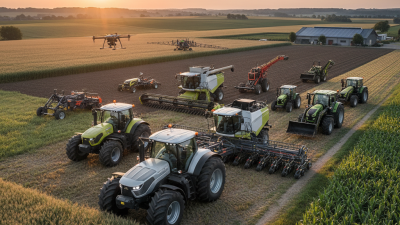
Choosing the right farm cultivation equipment is a practical decision, not a showroom exercise. Soil type, field size, crop spacing, moisture, labor, and maintenance access all matter. A 200-horsepower tractor may impress, yet waste fuel on a small, fragmented farm. A lighter machine may protect wet soil and reduce compaction.
The FAO’s State of Food and Agriculture reports highlight agricultural automation’s potential to improve productivity, resilience, and working conditions. However, the report also warns that unequal access can widen the gap between producers. USDA farm data reinforces the need for careful investment. Farms differ sharply in acreage, income, crop mix, and available labor. One universal machine cannot serve every field. That idea sounds obvious, but purchasing decisions often ignore it.
Agricultural engineer Dr. John Fulton offers a useful buying principle: “Choose technology that solves a measurable farm problem.” Measure first. Compare second. Buy later. Examine fuel use, tillage depth, working width, adjustment time, repair support, and resale value. Walk the field after operation. Look for uneven seedbeds, buried residue, ruts, and excessive soil disturbance. These details reveal more than a polished demonstration.
No checklist replaces experience. Some figures may change after one difficult season. That is worth admitting. A reliable choice balances performance, ownership cost, operator skill, and local service. The strongest farm cultivation equipment decision is rarely the most expensive one. It is the one that fits the farm’s real conditions and keeps working when weather, soil, and schedules refuse to cooperate.
Choosing cultivation equipment begins with a clear field objective. Are you opening compacted soil, preparing a fine seedbed, or controlling shallow weeds? Each goal requires a different working depth, tool shape, and travel speed. A grower managing heavy clay should inspect soil moisture before entering the field. Soil that sticks to blades can create smearing and costly rework. Too dry, and the machine may demand excessive draft power. Test a small area. It reveals more than a brochure.
Record field size, slope, residue level, and available tractor power. These details define operating conditions, not minor preferences. On uneven ground, stability and ground clearance may matter more than maximum width. In stony fields, simple frames and replaceable wearing parts can reduce downtime. Check adjustment points from the operator’s position. Frequent settings should not require unsafe climbing or improvised tools. Safety affects productivity.
Match the implement to your actual work window. A narrow spring window may justify greater capacity, but only if the tractor can pull it consistently. Measure fuel use, working depth, and finish quality during a supervised trial. Ask an experienced agronomist to review unusual soil constraints. I once underestimated residue volume and chose a setup that plugged repeatedly. The lesson was uncomfortable. Equipment choices need field records, not optimistic assumptions. Leave room for seasonal variation, because last year’s conditions may mislead this year’s decision.
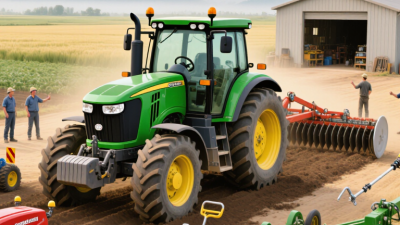
Choosing cultivation equipment starts beneath your boots. Test soil texture, drainage, pH, and compaction before comparing machines. Sandy soil may require lighter implements that avoid unnecessary disturbance. Heavy clay often needs stronger tools, but only when moisture is suitable. Working clay while it is wet can create dense layers that restrict roots. A penetrometer and laboratory soil test offer better evidence than appearance alone. I once selected equipment for a field that looked dry on top, but the lower layer remained saturated. That mistake increased fuel use and left uneven cultivation.
Terrain also controls equipment choice. Measure slopes, rough ground, stones, and the distance between separate plots. Hilly land may require compact, stable machinery with reliable braking and a low center of gravity. Narrow turns demand equipment with a suitable working width. Climate adds another concern. In wet regions, avoid entering fields until the soil supports the machine without deep ruts. In dry areas, dust can reduce visibility and accelerate wear. Keep seasonal records, and compare them with advice from qualified agricultural specialists.
Available space is easy to underestimate. Measure gates, storage doors, headlands, and the turning radius beside fences. Small fields usually benefit from narrower implements that reduce crop damage during repeated turns. Larger equipment may save time, but it can become impractical in tight plots. Check clearance before purchase. I still misjudge shed space sometimes. A machine that fits the field may not fit the workshop, especially after adding attachments or safety equipment.
A practical comparison of field conditions, equipment requirements, and suitable cultivation approaches.
| Assessment Dimension | Typical Condition | Key Risk or Limitation | Suitable Cultivation Equipment | Recommended Operating Approach | Selection Indicator |
|---|---|---|---|---|---|
| Soil texture | Sandy soil with rapid drainage and low water-holding capacity | Moisture loss, wind erosion, and reduced nutrient retention | Shallow cultivator, residue manager, precision planter, and drip or low-volume irrigation system | Use fewer aggressive passes, retain surface residue, and avoid working soil when it is excessively dry | Choose low-draft tools and equipment that supports precise seed placement and efficient water delivery |
| Soil texture | Clay or heavy clay soil with slow drainage | Compaction, smearing, poor seedling emergence, and difficult field access after rain | Subsoiler where a confirmed compacted layer exists, controlled-depth chisel plow, and raised-bed equipment | Work only within the soil’s workable moisture range and limit traffic on wet ground | Select adjustable-depth implements with adequate frame strength and tires or tracks that reduce ground pressure |
| Soil condition | High residue or conservation-tillage system | Hair-pinning, blocked openers, and uneven seed-to-soil contact | Residue-handling planter, strip-till unit, roller-crimper, or no-till drill | Match row cleaners and disc openers to residue volume; maintain consistent travel speed | Check opener clearance, residue capacity, closing-wheel adjustment, and seed-depth consistency |
| Terrain and slope | Level or gently rolling land, generally below about 5% slope | Lower rollover risk, but repeated passes can still increase erosion and compaction | Standard tractor, field cultivator, planter, and broad-acre harrow | Use controlled traffic where practical and avoid unnecessary tillage passes | Prioritize implement width, field capacity, transport width, and compatibility with available horsepower |
| Terrain and slope | Moderate slopes of approximately 5% to 15% | Runoff, soil erosion, reduced traction, and uneven working depth | Contour-capable equipment, lighter mounted implements, cover-crop seeder, and erosion-control tools | Operate across the slope where appropriate, reduce speed, and maintain soil cover | Look for stable wheel spacing, reliable braking, low center of gravity, and implement control on contours |
| Terrain and access | Terraced, irregular, or fragmented fields with narrow entrances | Large machinery may damage boundaries, increase turning losses, or fail to access all areas | Compact tractor, walk-behind cultivator, narrow-row planter, and small rotary or flail mower | Measure gateways, turning areas, terrace widths, and transport routes before purchasing | Select equipment with a narrow overall width, short turning radius, and easy attachment changes |
| Climate and rainfall | Semi-arid or drought-prone conditions with irregular rainfall | Water stress, crusting, wind erosion, and uncertain planting windows | No-till drill, residue spreader, water-efficient irrigation system, and soil-moisture monitoring equipment | Preserve residue, minimize soil disturbance, and schedule fieldwork using soil-moisture data | Give priority to moisture conservation, low fuel use, and accurate application control |
| Climate and rainfall | Humid or high-rainfall conditions | Waterlogging, disease pressure, rapid weed growth, and narrow harvest windows | Raised-bed former, drainage-maintenance tools, inter-row cultivator, and compact harvesting equipment | Improve drainage, avoid trafficking saturated fields, and maintain timely weed control | Assess corrosion protection, cleanability, flotation, and the ability to work between crop rows |
| Climate and temperature | Short growing season or frequent frost risk | Limited time for soil preparation, planting, and harvest | Multi-purpose tractor, combination seedbed tool, precision planter, and appropriately sized harvester | Reduce setup time and select equipment with enough capacity for the available fieldwork window | Compare effective field capacity, changeover time, service access, and local repair availability |
| Available space | Small plots, market gardens, or protected growing areas under 2 hectares | Large machinery is difficult to maneuver, store, and justify economically | Walk-behind tiller, compact rotary cultivator, precision seeder, bed shaper, and small sprayer | Use modular tools for frequent crop changes and narrow beds; avoid unnecessary soil pulverization | Evaluate bed width, aisle width, turning space, storage footprint, and operator ergonomics |
| Available space | Medium-sized diversified farm of approximately 2 to 20 hectares | Different crops may require several row spacings and attachments | Compact tractor, adjustable-row planter, inter-row cultivator, mower, and front or rear loader | Favor versatile implements and standardized attachment systems to reduce capital costs | Match tractor power, hydraulic flow, lift capacity, row spacing, and implement storage requirements |
| Available space | Large, open fields where annual cultivated area exceeds approximately 20 hectares | Low-capacity equipment can cause delays during narrow planting or harvest windows | Higher-capacity tractor, air seeder or precision planter, broad-acre cultivator, and grain or forage equipment | Balance working width with field shape, transport rules, soil compaction risk, and annual utilization | Compare hectares per hour, fuel consumption, maintenance cost, and expected annual operating hours |
| Farm infrastructure | Limited storage, workshop space, or on-site power supply | Weather exposure, difficult maintenance, and higher downtime risk | Compact or foldable implements, battery-powered hand tools where suitable, and equipment with common service parts | Measure door height, floor load, ventilation, fuel storage, and access for maintenance vehicles | Choose equipment that can be safely stored, cleaned, serviced, and transported using existing facilities |
Choosing farm cultivation equipment requires comparing more than purchase prices. Match each machine to soil, acreage, terrain, and crop timing. A tractor needs suitable PTO horsepower, hydraulic flow, lift capacity, and tire flotation. Tillage equipment should be judged by working depth, width, draft demand, and residue handling. For seeders, inspect row spacing, metering accuracy, hopper capacity, and ground speed.
Scale changes the decision.
The USDA National Agricultural Statistics Service reported 880.1 million acres across U.S. farms in its 2022 Census of Agriculture. That figure shows why field capacity matters. Compare hectares per hour, fuel use per hectare, turning time, and service intervals. A wider implement may increase output, but it can compact wet headlands. More power is not always better.
Irrigation equipment needs a different checklist.
The FAO AQUASTAT database states that agriculture accounts for roughly 70% of global freshwater withdrawals. Compare pump efficiency, flow rate, pressure stability, filtration, and application uniformity. For sprayers, evaluate tank capacity, nozzle output, boom width, and drift control. Pressure matters.
Irrigation equipment needs a different checklist. The FAO AQUASTAT database states that agriculture accounts for roughly 70% of global freshwater withdrawals. Compare pump efficiency, flow rate, pressure stability, filtration, and application uniformity. For sprayers, evaluate tank capacity, nozzle output, boom width, and drift control. Pressure matters.
Field capacity figures often look optimistic. Soil moisture, operator skill, and blocked outlets reduce performance. A practical trial should record fuel use, missed rows, downtime, and repair minutes. My own preference would be to test one working day before committing. The spreadsheet may still be wrong.
Choosing farm cultivation equipment starts with the power source, not the price tag. FAO reports that food systems consume about 30% of global energy. Diesel engines remain practical for heavy tillage, but electric systems can suit smaller fields and enclosed operations. Compare torque, operating hours, charging access, and fuel storage before deciding. A quiet motor is helpful, but limited battery endurance may become frustrating during a long planting day.
Compatibility deserves a field check. Match the tractor’s rated PTO power, hydraulic flow, hitch category, and lift capacity with the implement. ASABE machinery-management guidance emphasizes using measured field capacity, draft requirements, and operating speed. Do not trust a brochure alone. Walk behind the machine. Check shaft guards, hose routing, ground clearance, and adjustment points. A cultivator that fits the hitch may still overload the hydraulic system or compact wet soil.
Maintenance needs should be visible and affordable. The U.S. Department of Energy’s Operations and Maintenance Best Practices Guide reports that predictive maintenance can reduce maintenance costs by 25–30% and downtime by 35–45%. Those figures come from broader industrial operations, so farm results will vary. Record service hours, belt wear, filter changes, and unusual vibration. Keep common parts nearby. I have seen equipment sit idle because a small seal was unavailable. That detail is easy to underestimate. A simple checklist may outperform sophisticated monitoring when staff forgets daily inspections.
How to Choose the Right Farm Cultivation Equipment
Select Equipment Based on Cost, Safety, and Future Expansion
A low purchase price can hide expensive maintenance, fuel use, and downtime. Calculate the total cost over five years, including spare parts, storage, servicing, and operator training. A simple cultivator may suit a small vegetable plot, while larger fields may justify powered equipment. Measure your acreage carefully. Buying too much capacity can strain cash flow.
Safety must guide every comparison. Check protective guards, emergency stops, stable steps, clear controls, and reliable braking systems. Ask whether an operator can inspect moving parts without reaching into danger. On wet mornings, slippery platforms and packed soil create real risks. Keep maintenance access practical. If daily cleaning feels difficult, it probably will not happen consistently.
Think beyond this season. Choose equipment with adjustable working widths, common connection points, and enough capacity for planned crops. A compatible trailer or attachment can support gradual expansion without replacing the main machine. Confirm that local technicians can service it and that essential parts are available. I once underestimated storage space; the equipment survived, but access became frustrating. That mistake changed my buying checklist. Leave room for future tools, safer handling, and unexpected repairs. Growth plans can change. Your equipment should not trap you in one narrow workflow.