How to Find Top Farm Equipment Repair in China?

Choosing farm equipment repair in China is not a minor purchasing decision. A stalled tractor during planting can leave a field waiting, while a combine awaiting parts can miss a narrow harvest window. China’s Ministry of Agriculture and Rural Affairs reported that the comprehensive mechanization rate for crop plowing, planting, and harvesting reached 73.05% in 2023. The National Bureau of Statistics also reported total agricultural machinery power of about 1.11 billion kilowatts that year. These figures show the scale of mechanized farming—and why dependable service matters.

The right repair provider should demonstrate hands-on experience with your machine type, not just offer a broad service list. Ask about technician training, diagnostic equipment, genuine or compatible parts, written estimates, and response times outside major cities. Request examples of comparable repairs and speak with local customers. A clean workshop is reassuring. A clear parts-tracking process is better. Still, no checklist guarantees a flawless repair; parts delays and seasonal demand can disrupt even capable teams.

Agricultural machinery specialist Professor Luo Xiwen has contributed extensively to research on farm mechanization in China. A practical question for any repair expert is: “Can this team return my machine to work before the field window closes?” Treat that as a buying test, not a verified verbatim quotation. Compare providers using documented repair records, warranty terms, and realistic service coverage. The strongest choice is not always the cheapest or closest shop. It is the one that explains the fault plainly, communicates delays early, and stands behind its work. Ask for evidence. Then decide.
How to Find Top Farm Equipment Repair in China?

Understanding Farm Equipment Repair Needs in China

Farm equipment repair needs in China vary by region, crop, and working season. A tractor on a northern grain farm faces different wear from a small tiller in a southern orchard. Harvest periods leave little room for downtime, and rural distances can affect technician travel and parts delivery. Before requesting service, note the machine type, model year, operating hours, symptoms, and recent maintenance. A photo of a leaking hose or worn belt can help describe the issue, but it cannot replace an inspection. Ask whether the technician has repaired similar equipment and can test the machine after service. A clear estimate should list labor, parts, travel, and expected timing. Parts availability matters. A low quote does not always mean a quick repair.

Tips: Share clear photos and the machine’s service records. Ask about parts lead times and whether testing is included before approving work.

Repair quality also depends on matching the service to the actual fault, not just replacing the most visible damaged part. Ask for a brief explanation of the diagnosis and keep the final work record. Confirm what follow-up support is available if the fault returns. Conditions differ between farms, so no checklist catches everything. A practical conversation with a qualified technician can reveal details that paperwork misses.

Finding Qualified Agricultural Machinery Repair Providers

Finding a qualified agricultural machinery repair provider in China starts with the machines you operate. Ask whether technicians regularly service your tractor, harvester, planter, or irrigation equipment—not just similar machinery. A capable provider can explain likely failure points, diagnostic steps, and what cannot be confirmed before inspection. That honesty matters. Request examples of recent field repairs, technician training records, and references from farms with comparable workloads. Check whether mobile service reaches your location, especially during harvest. Ask how urgent breakdowns are prioritized and whether travel charges vary by county. A long drive can matter more than a low hourly rate.

Before authorizing work, request a written estimate separating labor, parts, travel, and inspection fees. Confirm that replacement parts match your machine’s specifications and come with clear sourcing and warranty terms. Ask for repair findings, replaced-part details, and maintenance recommendations in writing. Keep records. During an inspection, note fluid condition, belt wear, loose fittings, and fault codes; small details can reveal how carefully a technician works. Do not rely on polished promises alone. Compare response times, documentation, and how clearly staff answer practical questions. One visit may not tell the whole story, and busy farm schedules can make even a capable provider seem slow. Ask how callbacks are handled if the same fault returns.

Evaluating Technical Expertise, Parts, and Service Capacity

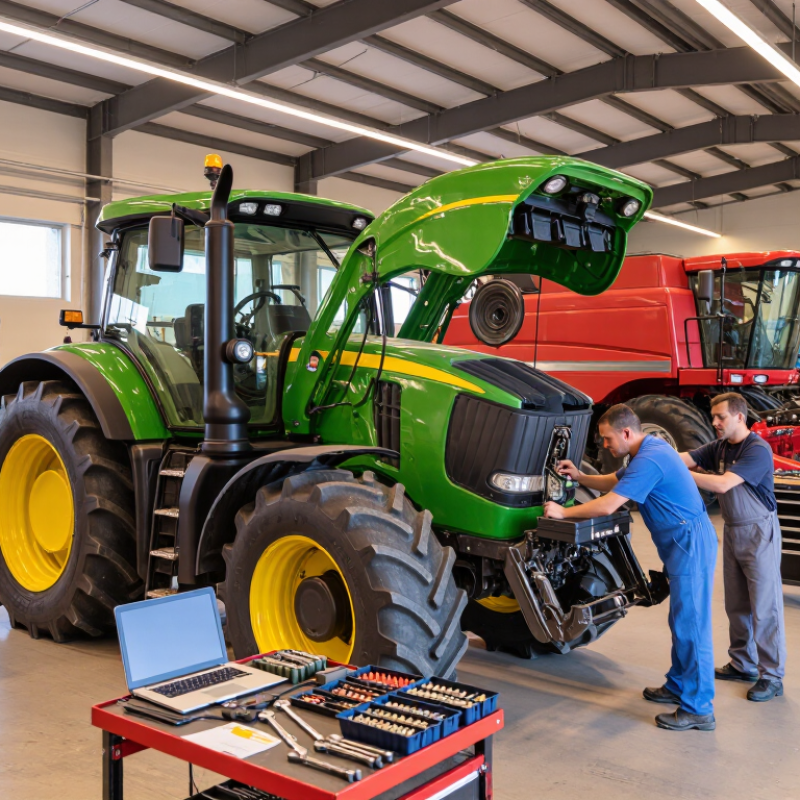
A strong farm-equipment repair service should explain its diagnosis, not just quote a repair price. Ask how technicians check hydraulic pressure, electrical faults, and engine performance. For a combine, request an example of how they isolate a recurring blockage or vibration. Specific answers are more useful than a broad claim of expertise.

China’s Ministry of Agriculture and Rural Affairs reported that the mechanization rate for crop cultivation, planting, and harvesting reached 75.6% in 2023, in its agricultural mechanization reporting. That scale makes dependable repair capacity important, especially during short planting and harvest windows.

Parts access matters as much as technical skill. Ask whether common filters, belts, bearings, and hydraulic seals are stocked locally, and whether part numbers are checked against the machine’s serial details. Get realistic lead times for less common components. A full shelf looks reassuring, but it does not prove the right parts are available.

Service capacity also shows in practical details: response times, mobile repair tools, workshop space, and clear job records. Ask for a sample inspection report. Check whether it records measurements, replaced parts, and follow-up checks.

No checklist is perfect. A repair provider may sound convincing, yet still struggle when several machines fail at once. Request references from farms with similar equipment and seasonal workloads, then verify what happened during their busiest period.

Checking Credentials, Coverage, and Repair Terms

When comparing farm equipment repair providers in China, check who will actually work on your machine. Ask about technicians’ training, years of field experience, and familiarity with your equipment type. Request sample service records or references from farms with similar machinery. A polished website is not proof of skill; it is easy to overlook that.

Confirm where the team can travel and how quickly it can reach your farm. Rural distance, seasonal demand, and road conditions can affect response times. Ask whether the quoted coverage includes on-site diagnosis, transport, and follow-up visits. Get specific service hours and parts arrangements in writing. “Nationwide service” may mean less than you expect.

Read the repair terms before authorizing work. Ask for a written estimate that separates labor, travel, and parts, and find out how extra work is approved. Check what warranty applies to replaced parts and completed repairs, including any exclusions. Ask whether removed parts will be returned or documented. Keep photos of damage and copies of invoices. One detail may still be missed, so review the paperwork with someone familiar with your machinery.

Comparing Quotes and Choosing a Repair Partner

A tractor that stops during planting can turn a small fault into a costly delay. When comparing repair quotes in China, give each workshop the same details: machine type, symptoms, location, and any warning codes. Ask for separate estimates for diagnosis, labor, travel, parts, and transport. Clear line items make differences easier to judge.

A low total may exclude essential work. Cheap can be costly. Check whether the quote covers testing after the repair, and ask what could change the price. Request the expected completion date and an explanation of parts availability, especially if your farm is far from a service center. If the cause is uncertain, a careful diagnostic fee may be more sensible than a confident promise made over the phone.

Choose a partner by checking relevant repair experience, response time, and how they document work. Ask for a written estimate, receipts, and clear warranty terms for labor and replaced parts. A technician who explains the fault in plain language is often easier to work with. Still, polished paperwork is not proof of good repairs; references from nearby farmers can add useful context. Before approving extra work, agree on a spending limit and require a call if the diagnosis changes. I would not treat the first quote as final; comparing details can reveal gaps that a headline price hides.

How to Find Top Farm Equipment Repair in China? Comparing Quotes and Choosing a Repair Partner

Compare repair quotes on more than price. Rate each provider from 1 (weak) to 5 (strong) using the same criteria.

How to use: These scores are illustrative, not market survey data. Replace them with scores based on written quotes, confirmed parts availability, warranty terms, and response commitments. Check that each quote covers the same repair scope before comparing totals.