China’s equipment market is broad, fast-moving, and difficult to rank with one simple metric. A supplier of industrial robots may offer very different strengths from a construction-machinery or power-equipment manufacturer. This guide examines ten prominent providers in China, considering product range, manufacturing capability, service coverage, and publicly available performance information.
The scale is significant. The International Federation of Robotics’ World Robotics 2024 report recorded 276,288 industrial robot installations in China during 2023, representing 51% of global installations. That figure signals strong demand for automation equipment, but it does not prove that every provider offers equal reliability or after-sales support. Details matter. A production line needs more than a polished brochure; buyers also need spare parts, clear maintenance terms, and technicians who can reach the site.
Manufacturing expert Zhou Ji has described intelligent manufacturing as “the main direction” of China’s manufacturing transformation. That idea helps explain why software integration and automation now matter alongside machinery itself. Still, rankings have limits. Public data can be incomplete, and company capabilities vary by sector and project. This overview is a starting point, not a substitute for technical checks. For anyone comparing provider equipment, the useful question is not only who is largest, but who can meet a specific operating need consistently.
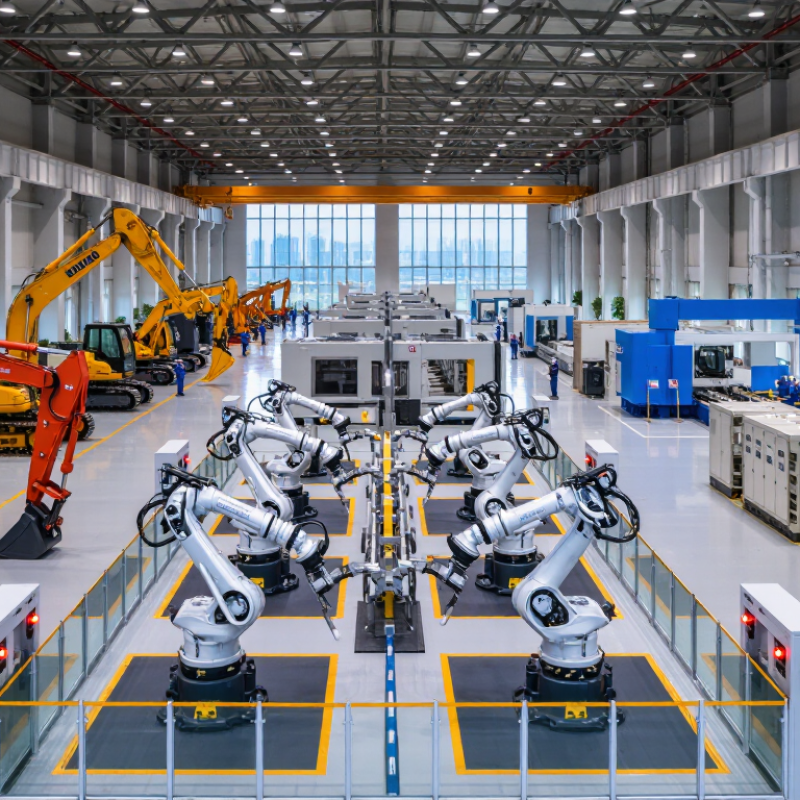
Scope of China’s Equipment Provider Market
China’s equipment provider market covers far more than machinery production. It includes manufacturers, distributors, engineering integrators, and maintenance teams. Their work spans factory automation, construction, agriculture, logistics, energy, and laboratory equipment. The boundaries can blur. A supplier may build a machine, install it, and train its operators.
For buyers, the practical scope is often defined by what happens after delivery. A production line may need compatible controls, spare parts, calibration, and local technicians. A construction project may prioritize transport, setup, and repair response. These details affect operating costs as much as the purchase price. Small components matter.
Provider capabilities vary widely. Some companies focus on standard equipment with short lead times, while others customize systems for demanding production conditions. Product descriptions alone may not reveal the difference. Buyers can ask for operating references, service coverage, documentation samples, and clear warranty terms. Check the details.
Market research also has limits. Public information may describe a provider’s product range but say little about service quality across different regions. Specifications can change, and a successful installation at one site does not guarantee the same result elsewhere. A careful assessment should compare technical fit, delivery support, and maintenance capacity—not just catalogue breadth.

Selecting a top equipment provider starts with fit, not a polished catalog. Define the material, output rate, operating environment, and acceptable downtime before comparing suppliers. Ask for drawings, performance limits, maintenance intervals, and a clear list of included components. Details matter. A machine that handles a small sample may behave differently during a full production run.
Check quality controls through specific records, not broad promises. Request inspection procedures, test results, and sample documentation for the equipment under review. If possible, inspect the production site or arrange a witnessed acceptance test. Paper promises fade. Also assess engineering support: How quickly can technicians answer a fault report, and are spare parts identified clearly? Delivery estimates, installation requirements, training, and warranty terms belong in the same comparison. A low purchase price can hide costly delays or difficult upkeep.
References from customers with similar operating needs can add useful context, but ask what conditions shaped their results. Compare total ownership costs across several years, including energy use, consumables, service, and planned upgrades. No scorecard is perfect; weighting price too heavily can distort the decision. Revisit your assumptions when evidence conflicts. A dependable provider should explain limitations plainly and support claims with records you can verify.
China’s equipment landscape is broad. A useful set of ten profiles should compare capabilities, not impose one universal rank. The profiles can span CNC machine tools, industrial robots, power systems, construction and agricultural machinery, mining equipment, pumps and compressors, packaging lines, semiconductor tools, and inspection automation. That mix reflects different buying needs: a factory may prioritize fine repeatability, while a jobsite needs uptime under dust and vibration.
The National Bureau of Statistics reported that equipment manufacturing value added rose 7.7% in 2024, versus 5.8% growth across industry overall. The International Federation of Robotics’ World Robotics 2024 report counted 276,288 industrial robots installed in China in 2023, or 51% of global installations. These figures show industrial scale, but they do not prove that every supplier offers the same quality or service.
For each profile, examine accuracy under load, energy use, controls integration, spare-part access, and technician response times. A compact machine can save floor space; poor commissioning can erase that advantage. Check service coverage. A ranking can mislead. One limitation is that industry reports track sectors, not supplier-level reliability, so buyers should verify references and trial results before comparing quotations.
Major Equipment Categories and Their Applications
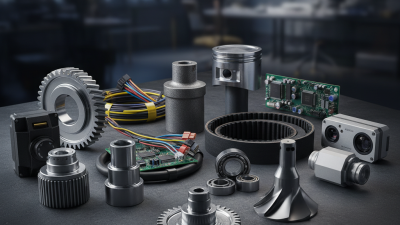
China’s equipment landscape covers production, material handling, utilities, and quality control. Machine tools cut and shape metal parts. Industrial robots handle welding, assembly, palletizing, and repetitive pick-and-place work. Pumps and compressors support fluid and air systems, while boilers provide process heat. Construction equipment moves earth and materials. Testing instruments check dimensions, pressure, and electrical performance. Applications differ by plant size and process.
The International Federation of Robotics reported 276,288 industrial robot installations in China in 2023, representing 51% of global installations, in World Robotics 2024. That figure signals strong adoption, but it does not prove automation suits every factory. A small workshop may gain more from reliable machine tools than a complex robotic cell. Utilities and inspection equipment also matter: a compressor’s energy use or a gauge’s calibration can affect daily output.
Tips: Match capacity to actual demand. Check maintenance access, spare-part availability, and operator training before buying. Fit matters. I would compare real production needs carefully; equipment specifications alone can make the decision look simpler than it is.
This overview compares major equipment categories manufactured and used in China. It is organized by category and application, not by company or brand ranking.
| No. | Equipment Category | Typical Equipment | Major Applications | Common Selection Considerations |
|---|---|---|---|---|
| 1 | Machine Tools | CNC lathes, machining centers, milling machines, grinding machines | Machining metal parts for automotive, aerospace, electronics, mold-making, and general manufacturing | Workpiece size, machining accuracy, spindle speed, tooling compatibility, and production volume |
| 2 | Construction Machinery | Excavators, wheel loaders, bulldozers, road rollers, concrete pumps | Earthmoving, building construction, roadwork, quarrying, and infrastructure projects | Operating weight, bucket or lifting capacity, terrain, fuel or energy use, and service requirements |
| 3 | Mining Equipment | Drilling rigs, crushers, screening machines, conveyors, mineral-processing equipment | Ore extraction, crushing and sizing, bulk-material transport, and mineral separation | Material hardness, throughput, particle-size requirements, site conditions, and dust control |
| 4 | Power and Electrical Equipment | Power transformers, switchgear, circuit breakers, generators, power cables | Electricity generation, transmission, distribution, substations, and industrial power systems | Voltage and current ratings, load capacity, protection requirements, efficiency, and applicable standards |
| 5 | Industrial Automation | Programmable logic controllers, industrial robots, drives, sensors, control systems | Automated assembly, packaging, material handling, process control, and factory monitoring | Required precision, cycle time, system integration, safety functions, and operating environment |
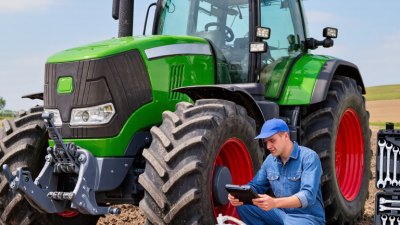
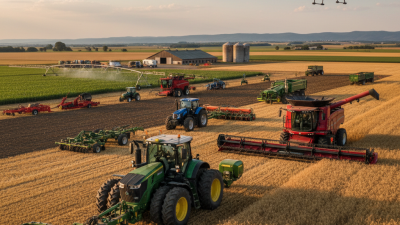
| 6 | Agricultural Machinery | Tractors, combine harvesters, seeders, planters, irrigation equipment | Land preparation, planting, crop care, harvesting, and water management | Crop type, field size, terrain, implement compatibility, and seasonal operating conditions |
| 7 | Material-Handling Equipment | Forklifts, cranes, hoists, stackers, automated storage and retrieval systems | Warehousing, ports, factories, construction sites, and movement of heavy or bulk loads | Rated load, lift height, travel path, indoor or outdoor use, and operator or system safety |
| 8 | HVAC and Refrigeration Equipment | Chillers, heat pumps, air-handling units, cooling towers, industrial refrigeration systems | Building climate control, cold storage, food processing, commercial facilities, and industrial cooling | Cooling or heating capacity, temperature range, energy efficiency, refrigerant, and installation conditions |
| 9 | Environmental Protection Equipment | Dust collectors, wastewater-treatment systems, filtration units, flue-gas treatment equipment | Air-pollution control, industrial wastewater treatment, emissions management, and resource recovery | Pollutant type, treatment capacity, discharge or emission requirements, maintenance, and operating cost |
| 10 | Process Equipment | Pumps, compressors, industrial boilers, pressure vessels, heat exchangers | Chemical processing, oil and gas operations, water supply, power generation, and manufacturing plants | Flow or pressure requirements, temperature, material compatibility, process safety, and applicable codes |
Choosing among China’s leading equipment providers requires more than comparing headline prices. Product range should be checked against actual production needs: a factory may need cutting, forming, inspection, and packaging equipment, not just one impressive machine. Range matters. Technology claims deserve measurable proof, including cycle time, repeatability, energy use, and compatibility with existing controls. Ask for test records and a live demonstration; a polished catalog can still hide a narrow service network.
Industry context is significant. The International Federation of Robotics reported 276,288 industrial robot installations in China in 2023, equal to 51% of global installations (World Robotics 2024). This reflects a large automation ecosystem, not the quality of any single supplier. Compare providers by documented export markets, local service coverage, spare-parts lead times, and technician training. Global reach is practical, not just a map of shipping destinations. This comparison has limits: public reports rarely measure after-sales performance consistently.