What Are the Top 10 Types of Agriculture Farm Equipment?
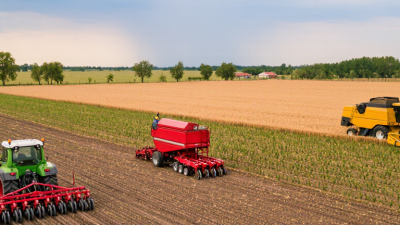
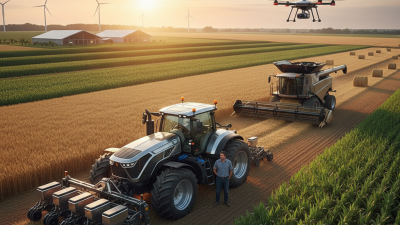
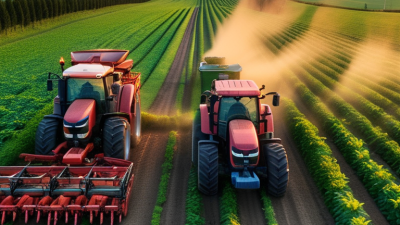
Modern farms rely on more than tractors. They use specialized machines to prepare soil, plant seeds, manage crops, and move harvests. The right agriculture farm equipment can save labor and help keep work consistent. But a machine that suits a large grain operation may be costly or impractical for a small vegetable farm. Size matters. So do soil, climate, crop choice, and available service support.
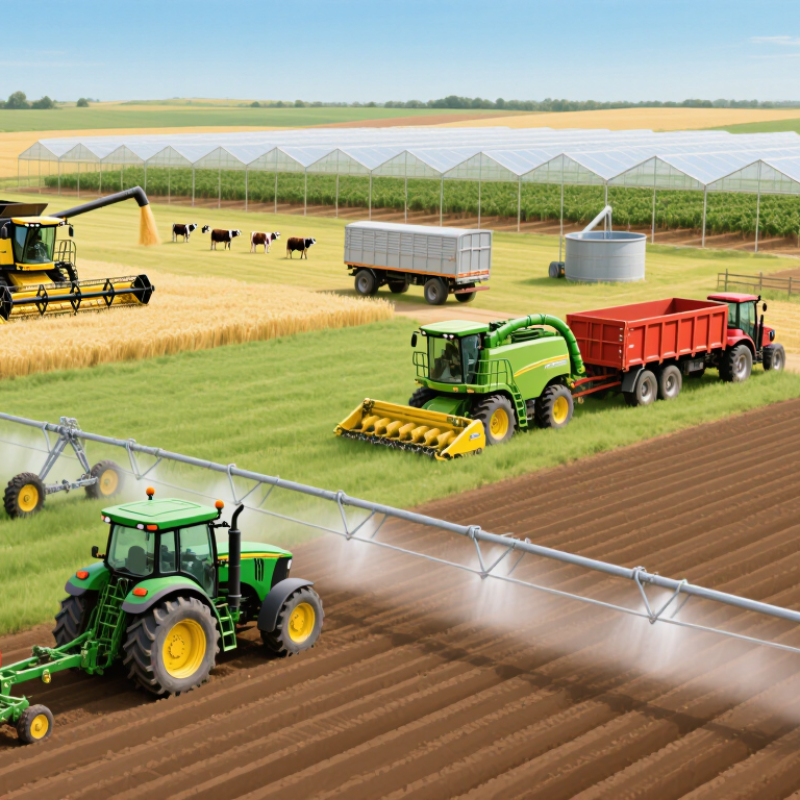
This guide explores ten common types of farm equipment, from tractors and tillage tools to planters, irrigation systems, sprayers, and harvesters. It also considers equipment for hauling materials and handling livestock. Each category serves a different purpose, and some farms use only a few of them. There is no universal ranking. A combine harvester may be essential on a grain farm, while a greenhouse grower may rarely need one. That distinction is easy to overlook. Readers should compare capacity, fuel or power needs, maintenance, and compatibility with existing tools before choosing. A machine’s purchase price is only part of its cost; parts and downtime matter too. Even so, equipment decisions do not have one perfect formula. This overview offers a practical starting point, not a substitute for local advice or a careful assessment of farm needs.
Tractors and Front-End Loaders for Farm Power and Material Handling
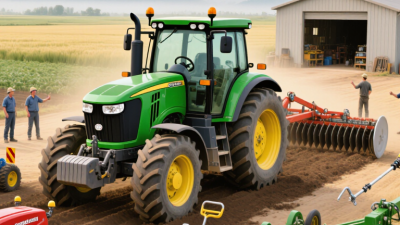
On a working farm, a tractor supplies power for fieldwork, transport, and daily maintenance. The right size depends on the implements, terrain, and hours of use. Check horsepower, hydraulic flow, and power-take-off requirements before matching a tractor to equipment. A mower may need less power than a loaded baler or heavy tillage tool. Tire choice matters, too: unsuitable tires can damage wet soil or lose traction on slopes. Small details add up.
A front-end loader turns a tractor into a practical material-handling machine. It can move feed, gravel, manure, or stacked supplies around the yard. Choose a loader whose rated capacity suits the work, and confirm that its attachment fits the tractor. Keep loads low while traveling, especially on uneven ground, and avoid turning sharply with a raised bucket. Visibility can be limited when carrying bulky materials. That catches people out. Even experienced operators may misjudge a load’s weight or the ground beneath it, so slow movements and clear travel paths are sensible habits. A loader is useful, but it is not a substitute for a forklift or a stable work surface.
Plows and Harrows for Soil Preparation
Plows and harrows prepare soil in different ways. A plow cuts and loosens soil, while some designs turn it over and bury surface residue. This can help manage heavy plant material, but full inversion is not right for every field. Soil type, slope, moisture, and the next crop all matter. Check a small section before working the whole field. Wet soil may smear beneath the plow, leaving a dense layer that roots struggle to cross.
Harrows break clods, level ridges, and create a more even seedbed after plowing. Their teeth or discs work best when set to match soil conditions and the required finish. Too much speed can throw soil unevenly. Too many passes can dry the seedbed and consume extra fuel. A smooth field can still be a poor seedbed.
Look closely at the soil behind the equipment. It should be workable, not powdery or compressed. Adjust working depth gradually, and inspect for residue bunching or uneven furrows. These checks take time. They also prevent small setup errors from repeating across an entire field. The ideal surface is not always the neatest one; preserving moisture and soil structure may matter more than a perfectly level finish.
10 Types of Soil-Preparation Equipment: Plows and Harrows
Indicative working-width ranges for common tillage implements
Working width varies by implement model, configuration, and operating conditions. The ranges shown are representative examples, not a ranking; wider equipment is not necessarily suitable for every farm or soil type.
Seeders and Planters for Crop Establishment
Seeders and planters shape crop establishment, one of the most consequential jobs in farm equipment. A grain drill places many small seeds in narrow rows; a planter meters larger seeds individually. Both must match seed size, soil condition, residue, and desired spacing. Depth matters. A seed sitting in dry soil may emerge unevenly, even when the machine looks perfectly adjusted.
The scale is substantial: FAO’s Cereal Supply and Demand Brief estimated 2023 global cereal production at about 2.84 billion tonnes. For growers, consistent placement can support an even stand, but no machine removes weather risk. USDA Economic Research Service reported that U.S. cover-crop acreage reached 15.4 million acres in 2017, about 50 percent above 2012. That shift also raises practical questions about residue handling and seed-to-soil contact.
Before planting, operators can check metering, openers, and closing wheels, then dig behind the machine to verify depth. Small details matter. A drill set for one field may struggle in another; damp clay and dry, residue-covered ground behave differently. Calibration charts help, but they are not a substitute for checking actual seed spacing. It is easy to trust the display too much. USDA ERS, Cover Crop Trends, Programs, and Practices in the United States; FAO, Cereal Supply and Demand Brief.
Sprayers and Fertilizer Spreaders for Crop Care
Sprayers and fertilizer spreaders turn crop-care plans into work across the field. A sprayer’s boom, nozzle spacing, and droplet size affect coverage; clogged tips can leave visible untreated strips. Before spraying, check filters, hoses, and pressure, then calibrate output at the speed you intend to drive. A fertilizer spreader needs equal attention. Uneven flow can create pale bands or excessive growth, especially near field edges. FAO’s FAOSTAT Pesticides Use dataset reports 3.70 million tonnes of pesticide active ingredients used in agriculture worldwide in 2022. That scale makes accurate application worth careful attention.
Tips: Catch a spray pattern on water-sensitive paper. Weigh spreader output over a measured distance. Recheck after changing speed, product, or settings.
Precision is not automatic. Wind, temperature, crop height, and worn components can undermine careful calibration. Keep notes on weather, field conditions, settings, and results; they help explain why one pass worked and another did not. Follow product-label directions and use suitable protective equipment. A missed strip is easy to spot. Overlap can be harder to notice, and I would not assume a neat-looking pass proves the rate was right. Use field observations and equipment checks together, then adjust cautiously rather than chasing a perfect pattern in one trip.
Combines and Balers for Harvesting and Crop Processing
Combines and balers turn a narrow harvest window into manageable work. A combine cuts standing grain, separates kernels from stalks, and stores grain in a tank. Its header should match the crop and field conditions. In lodged or damp crops, travel speed may need to drop to reduce grain loss. Watch the grain tank, sample the harvested grain, and check behind the machine for kernels left on the ground. Small losses add up.
Tips: Before harvest, inspect belts, guards, knives, and fire-safety equipment. Set the combine using crop moisture and field conditions, then make a short test pass. Check the straw and grain afterward. Adjust one setting at a time.
Balers gather cut hay or straw and compress it into bales for storage or handling. Choose bale size and density based on storage space, available transport, and how the material will be used. A knot that slips or a chamber packed unevenly can spoil a bale. Keep pickup height low enough to collect crop, but not so low that soil enters the bale. It is tempting to chase speed; I would rather pause and inspect a rough bale than discover a whole uneven stack later. Do not ignore weather: damp material can heat in storage, so check moisture before baling and stacking.